Congratulations! You've made the big step and decided to update your timpani heads. You're on your way to upgrading the sound of your drums!
You've now run into one of the most confusing purchases of your musical career. Hazy, Clear, Orchestral, Strata, TC-Series, TI-Series, Renaissance, Steel, Low-Profile Steel, Aluminum, and that's all before you've even started looking at model numbers! It's enough to send anyone down a long rabbit hole that you just don't have time to follow.
Don't worry, we've got you covered and you'll soon be ordering timpani heads like a pro!
For the full care picture beyond head selection, see our essential timpani care guide.
Where to start
Here are the main things you need to know when it comes to buying timpani heads:
- Size of head needed
- What type of coating
- What type of insert
What size head do you need?
Step 1: Find your drum size
Note: We deal mostly with schools in the United States, so this post is about the timpani we see on a regular basis.
Extended Collar Drums
If you are in the US and have Adams, Ludwig, Majestic, or Yamaha timpani made after 1978, you'll more than likely have these size drums: 32", 29", 26", 23", and 20". The exception to this rule is the Yamaha 8300R series, which offers 27" and 24" options. It's always smart to measure your drums to be certain they are these sizes.
Regular / Standard Collar Drums
This is where things can start to get tricky. If you have older Ludwig, Leedy, Premier, Slingerland, or WFL drums that date before 1978, these bowl sizes can be 32", 30", 29", 28", 27", 26", 25", 24", 23", or 20", so you need to measure your bowl size.
How to find your bowl size
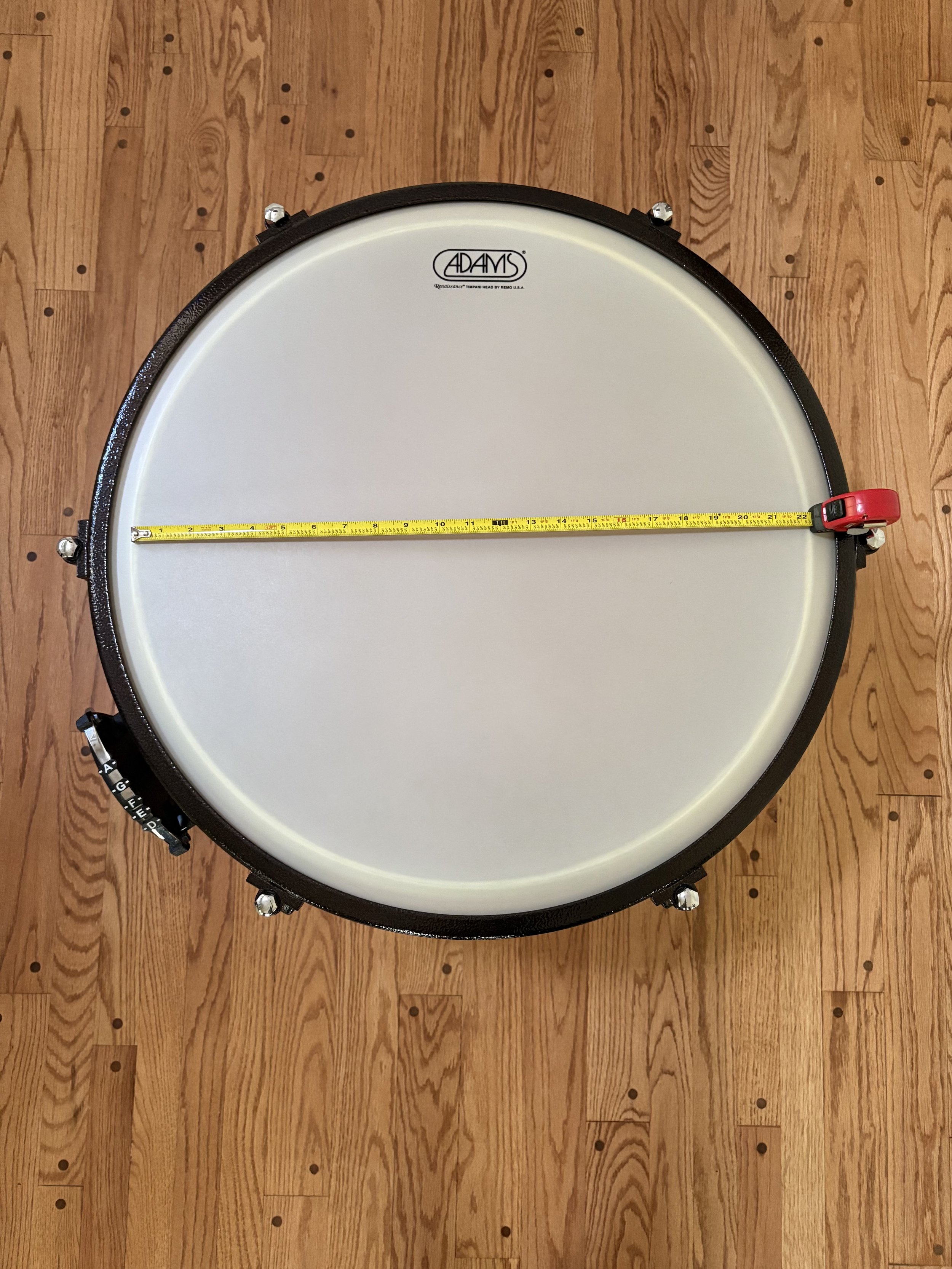
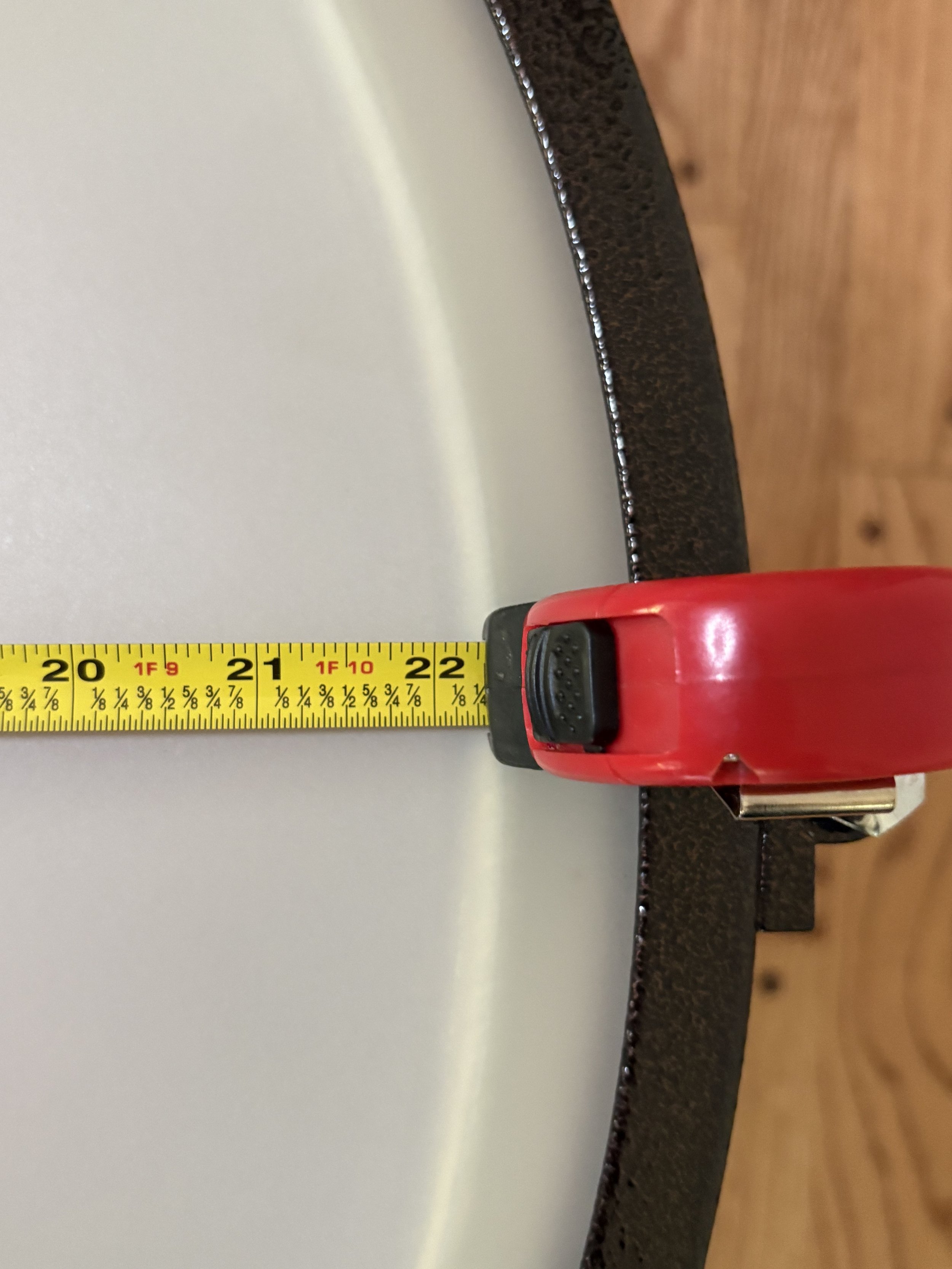
To measure your bowl size, simply measure from one side of the bearing edge directly across to the other side of the bearing edge. You'll probably find that it won't measure exactly to one of the sizes above (for example, 32 inches), but will be a little short. Don't worry, just round up to the nearest whole number: a 22 1/4" bowl rounds up to 23". There are a few exceptions, which we'll cover next.
Exceptions
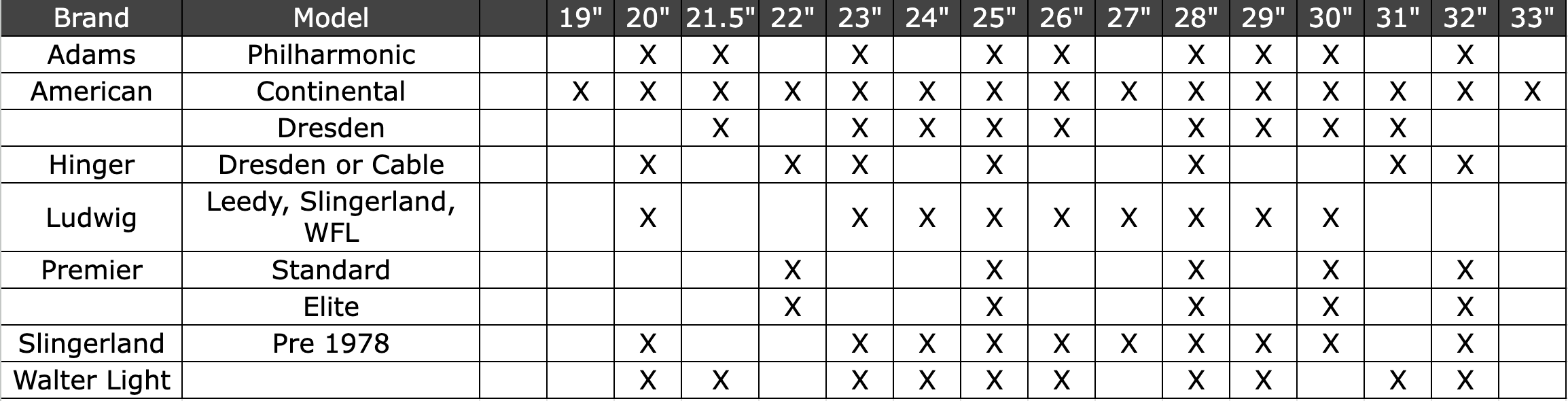
Here is a chart of timpani that have odd sizes to watch out for.
Step 2: What kind of collar do you have?
In general, there are two types of drums: Extended Collar and Regular / Standard Collar.
Extended Collar
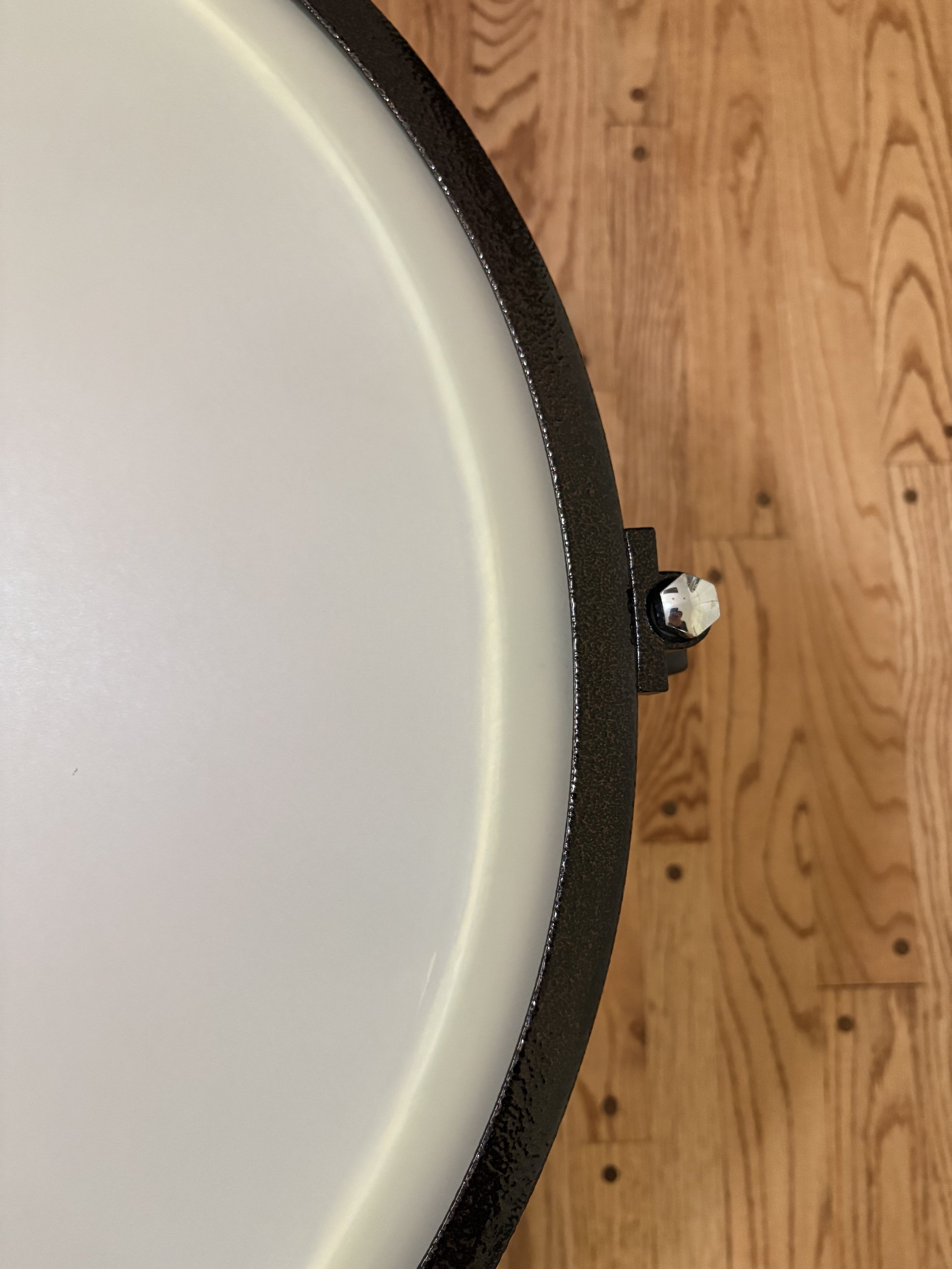
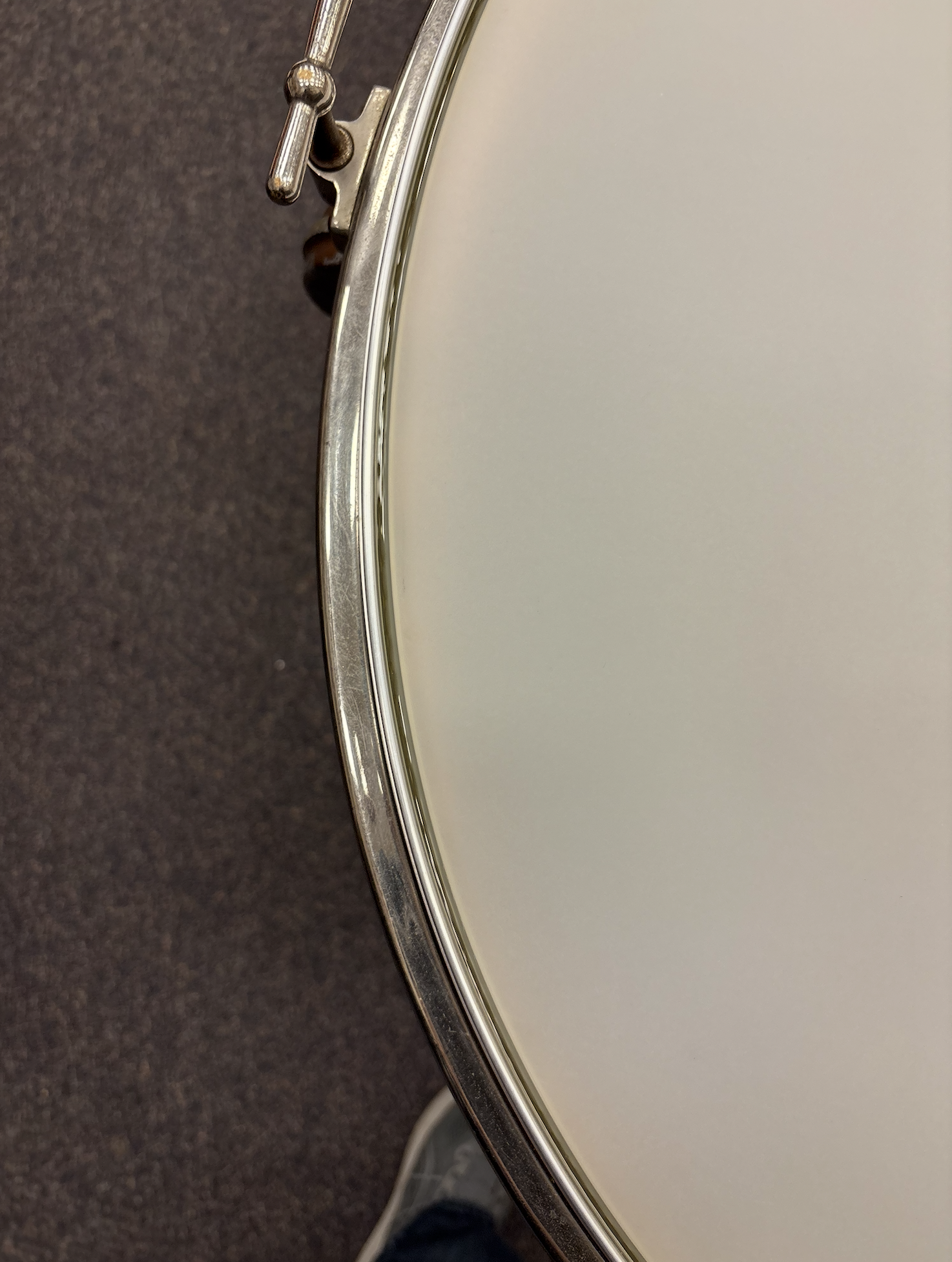
If you have drums made after 1978, you'll have what is called an "Extended Collar" drum. Simply put, these drums have an extra inch or more of timpani head between the counter-hoop (the "rim") and the bearing edge (the edge of the bowl). Just trust us when we say this makes the drums sound better.
Regular / Standard Collar
These drums pre-date 1978 and have a half inch between the counter-hoop and the bearing edge. This was the original design on modern timpani until manufacturers switched to Extended Collar around 1978.
Step 3: What size head do you need?
Extended Collar Drums
These drums require heads that are 2 inches larger than the bowl size. For example, a 32" timpano gets a 34" head. Why? There is 1 inch of extra head on the left side of the drum and another inch on the right side. If you have Adams (see exceptions below), Ludwig, Majestic, or Yamaha drums made after 1978, this rule will apply. As always, a few extended collar drums don't follow this rule, and those are listed in the exceptions section below.
Regular / Standard Collar
These drums require heads that are 1 inch larger than the bowl size. For example, a 25" timpano gets a 26" head. Why? There is a half inch of extra head on the left side and another half inch on the right side.
Special note: if you have a Ludwig 23" timpano with a regular / standard collar, it uses a 24 1/4" head.
Exceptions
As musicians, we're always chasing the best sound, and some manufacturers have made drums of different sizes over the years to produce different characteristics of tone. If you have a set of these drums, be sure to check the Remo and Evans timpani head charts to find the correct head size. These include Adams Philharmonic, American Drum, Hinger, pre-1978 Ludwig 23" timpani, Premier Standard or Elite, and Walter Light timpani.
Check Remo's timpani head chart or the Evans timpani head chart if your drums fall into one of these exceptions.
The shortcuts
Above is the standard explanation of how to find what size head you need for your drums. Here are a few other ways to check for the head size.
1. Measure the counter-hoop
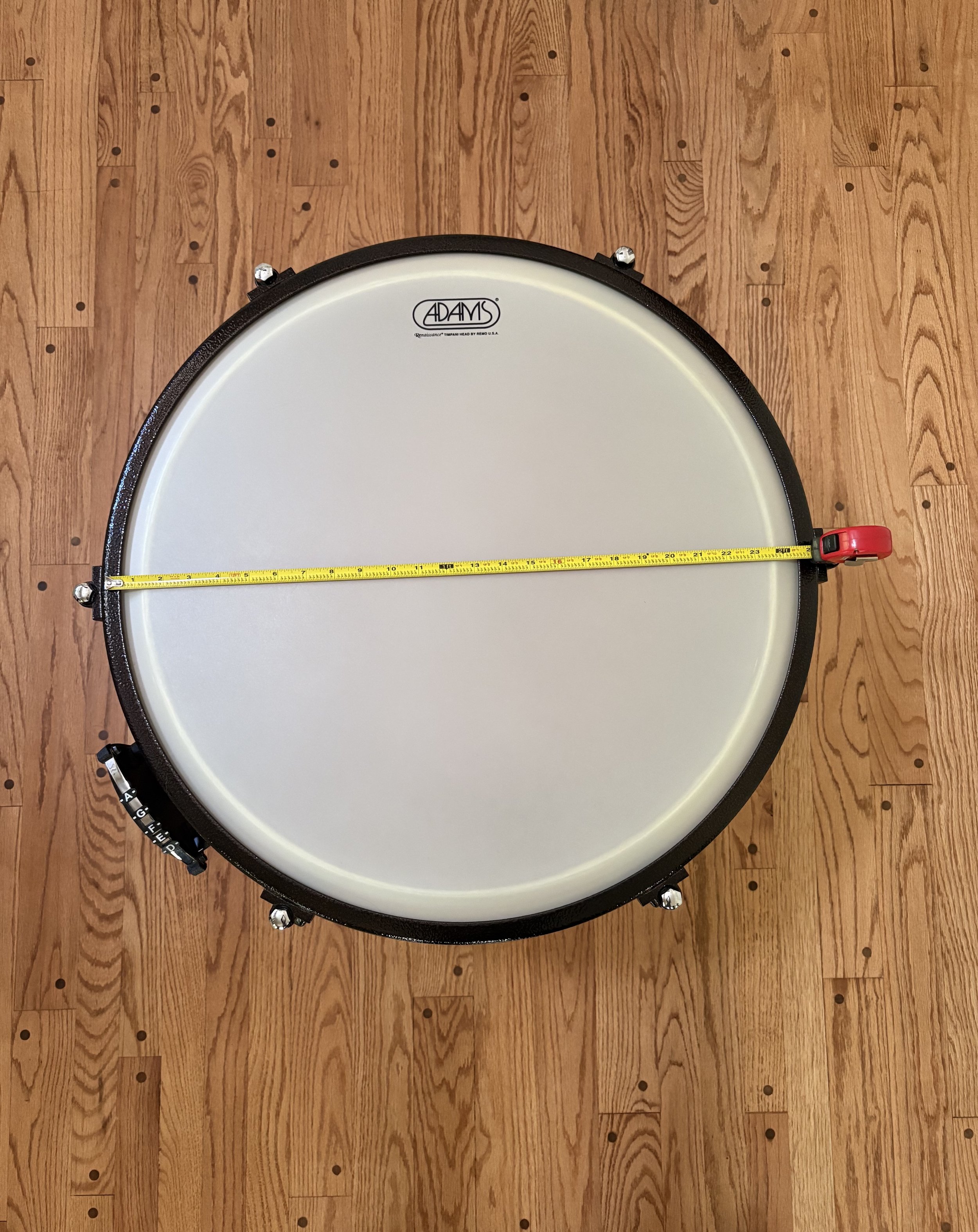
Measure from the middle of the counter-hoop to the middle of the counter-hoop on the opposite side. Generally speaking this will get you roughly the size that you need without taking the head off, especially if you have Extended Collar drums. We use this method to double check our first measurement, especially when working with Regular Collar drums. Essentially, if it's measuring about 25" across, then a 25" head would work. This is not 100% reliable, so we don't recommend doing this as your first option.
2. Measure the head
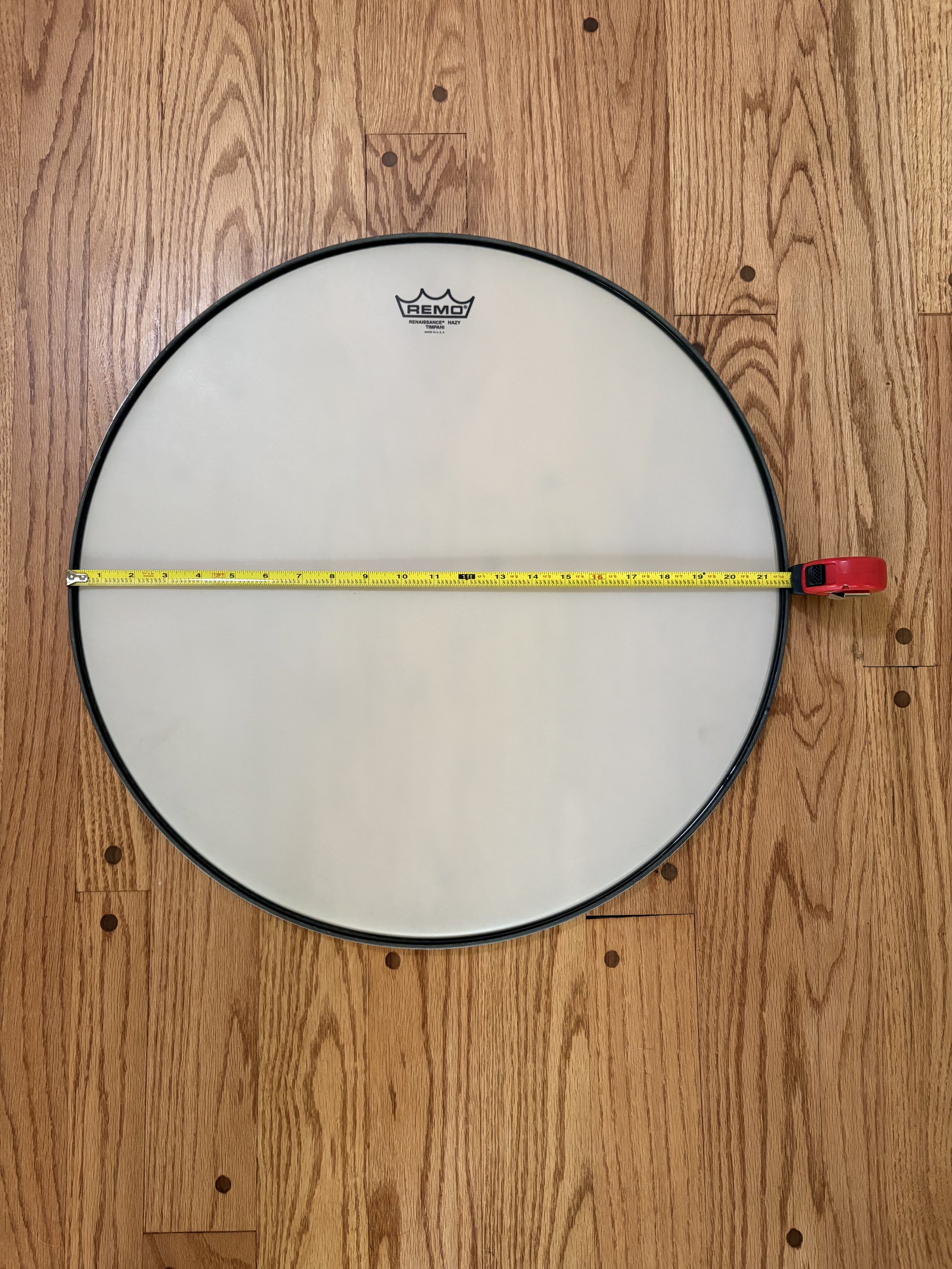
If you're comfortable replacing the heads, you can simply take the old head off and measure it from one side to the other to get the correct size.
3. Look for model numbers
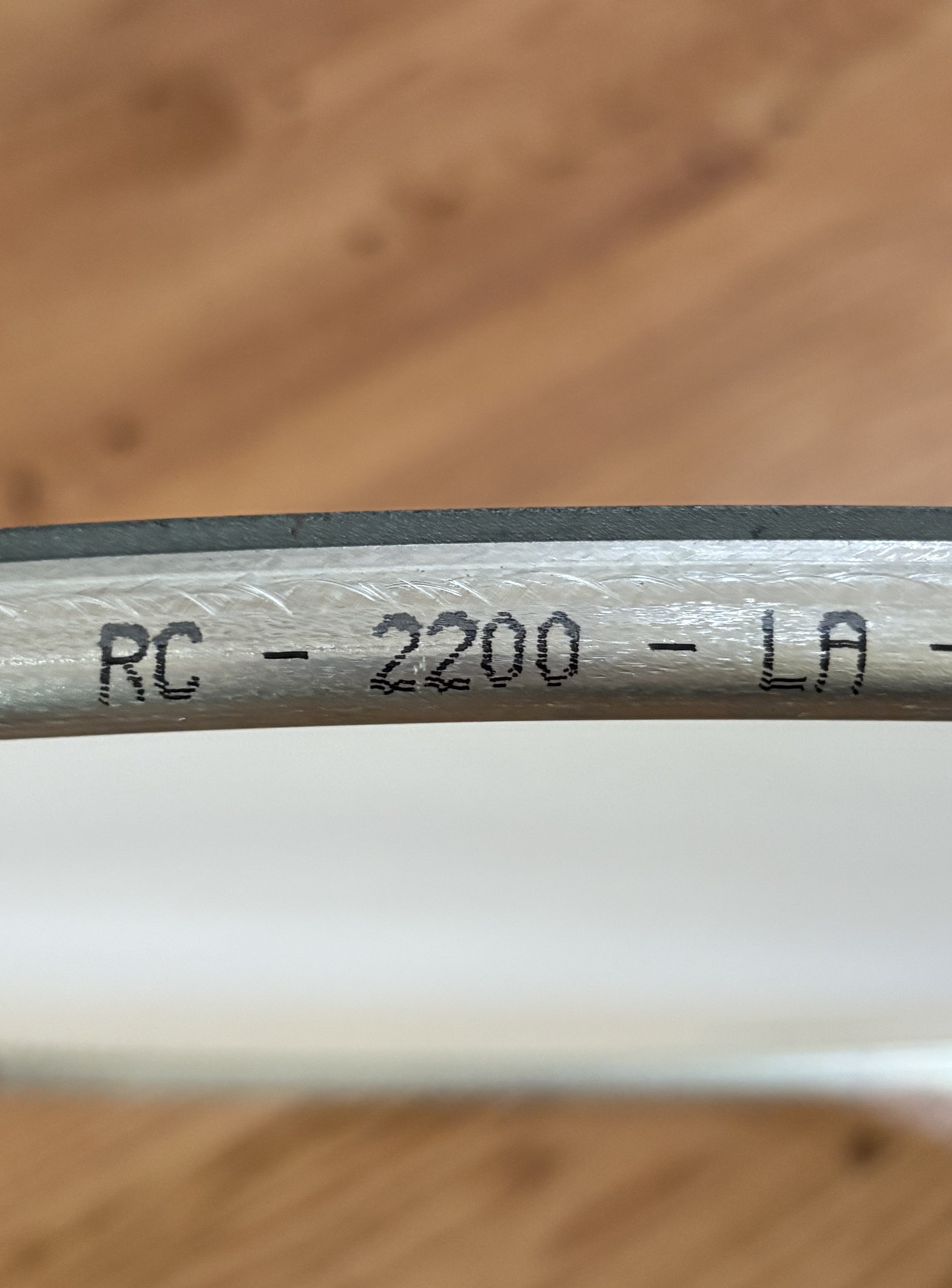
If the head is off the drum, you can look on the side of the flesh hoop for some printed numbers (2425, 2500, 3108, etc.) and those are the sizes. We'll discuss these numbers later.
Prefer to watch instead of read? We walked through head sizing on Instagram in about a minute.
Examples
Yamaha drum with extended collar measures 28 3/8" from bearing edge to bearing edge. This rounds up to a 29" bowl size. Requires a 31" head.
Adams Professional drum with extended collar measures 31 1/2" from bearing edge to bearing edge. This rounds up to a 32" bowl size. Requires a 34" head.
Ludwig regular collar drum measures 27 7/8" from bearing edge to bearing edge. This rounds up to a 28" bowl size. Requires a 29" head.
Would rather skip the math?
We handle timpani head replacement as part of our standard repair work for schools, music organizations, and musicians that would rather not think about head changes at all.
Choosing a head coating
Glad you made it through the last section, that can be a bit confusing. Now comes the fun part of selecting what type of sound you want.
The fundamentals
We may go into a deep dive on the history of heads in a different post, but the short version is that they were traditionally made from calf skin. Calf skin produces a very warm and rich sound while having a wide dynamic range, making it a great choice for top level performances. In fact, many of the top timpanists in the United States still use calf skin, but it requires daily attention and is very susceptible to changes in humidity, which does not make it ideal for school use.
Instead, synthetic heads are standard practice, and the great part is that you can choose what kind of sound you want your drums to produce.
Construction
Timpani heads are made from Mylar, which is a brand name of polyester film (think Kleenex for tissues). For you drum nerds out there, a 7.5 mil film is standard practice. You can purchase timpani heads that are just this Mylar film, or there are options to purchase heads that have a coating on them, which causes the head to produce a different type of tone, articulation, and sustain.
Step 1: Pick your film
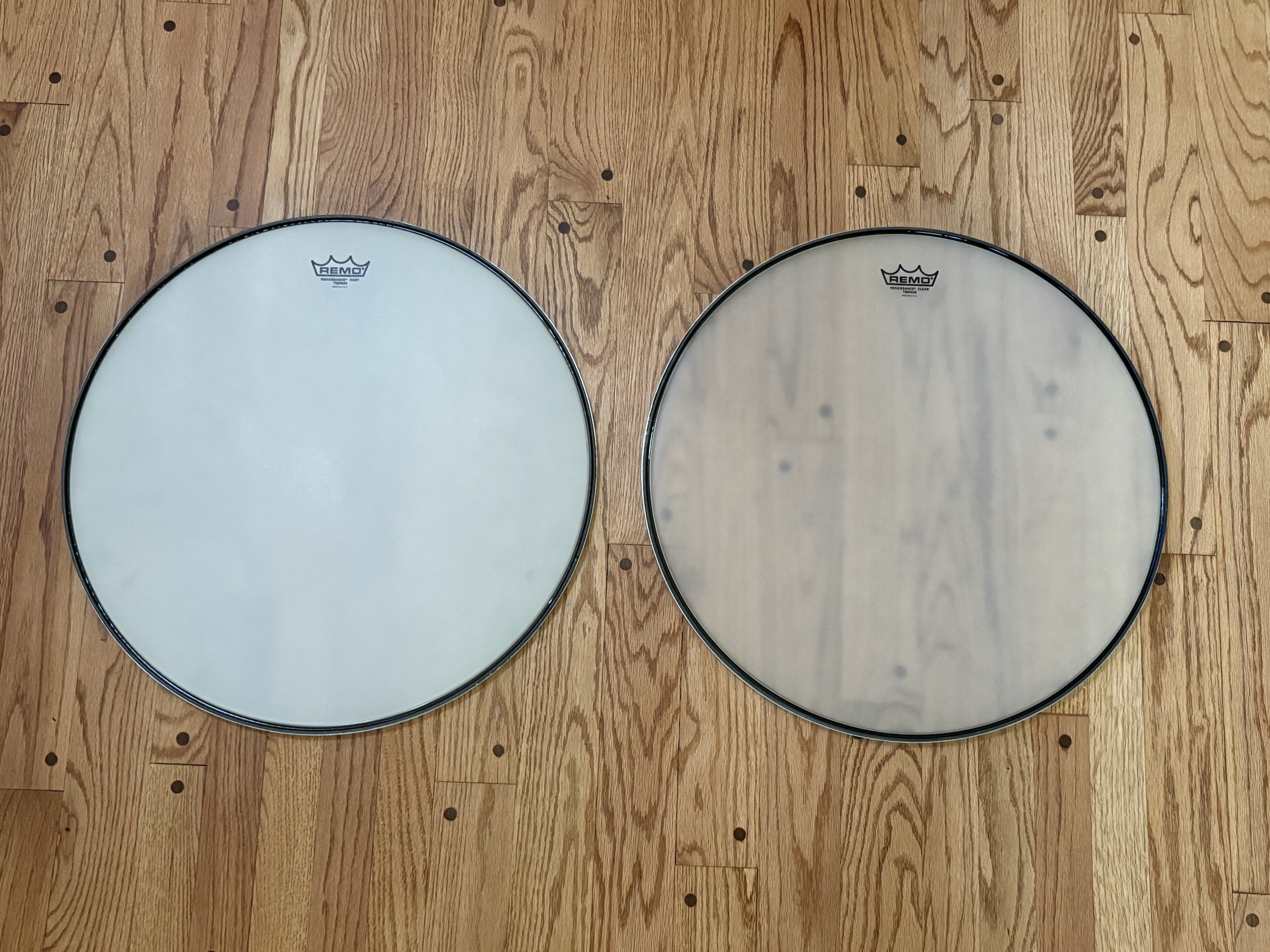
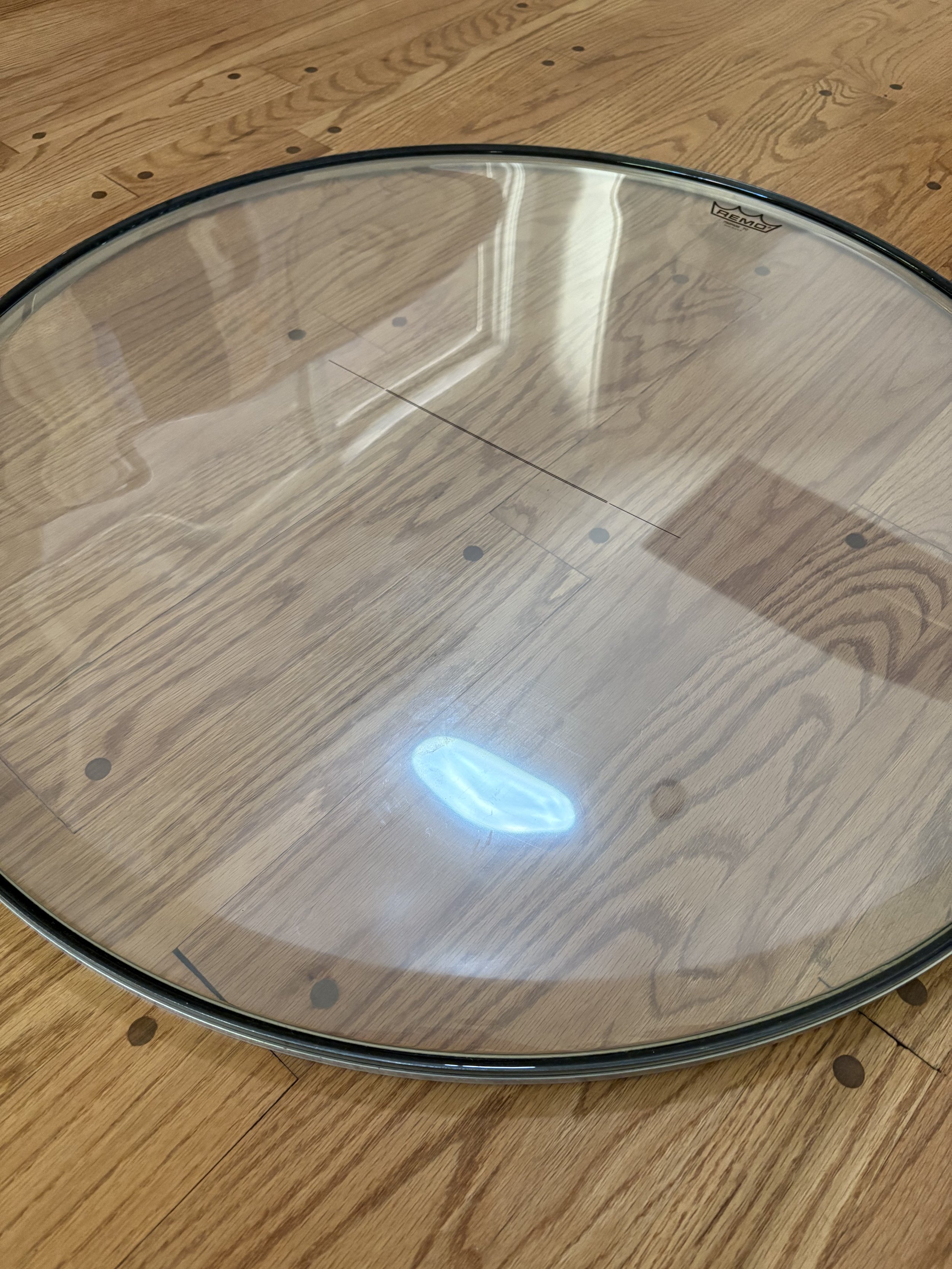
Clear heads
Simply the Mylar film with no coating. While some versions are fully transparent, both companies have options that put a little color to them.
Tone: Brighter, vibrant, "open." Sustain: Longer resonance and more overtones. Articulation: Stronger, more immediate attack on the initial note.
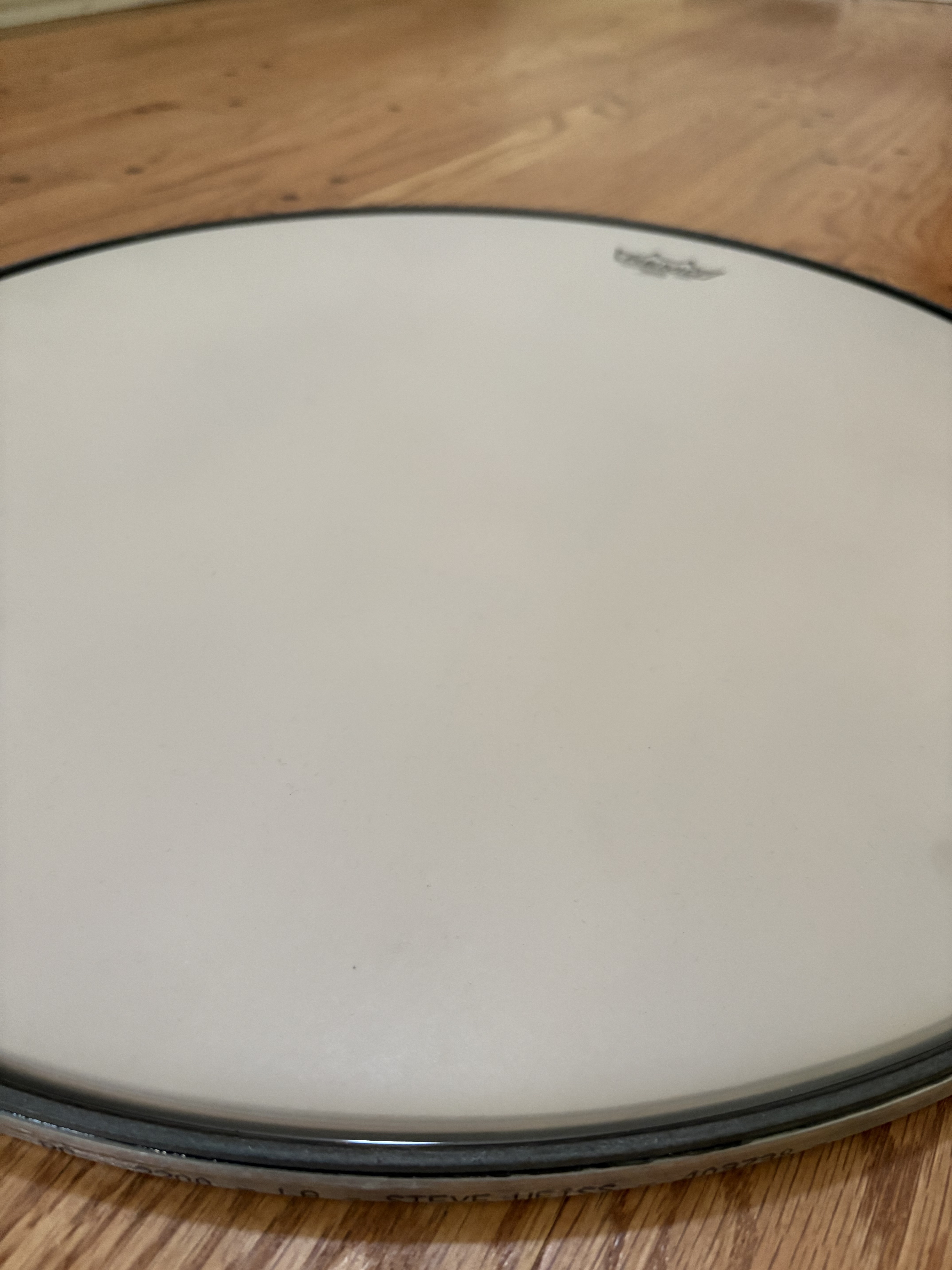
Coated (Hazy) heads
Have a textured layer that mimics the look and sound of natural calfskin.
Tone: Warmer, darker, "focused." Sustain: Shorter decay with fewer ringing overtones. Articulation: Softer, less "plastic" sounding, better definition in fast passages.
Step 2: Evans or Remo?
These are the two timpani head manufacturers in the United States for synthetic heads. Here's the difference between their approaches to the manufacturing process.

Evans
Uses what they call "Level 360 Technology," which helps the head to sit flat across the bearing edge right out of the box, essentially omitting the seating process, which is when the head conforms to the shape of the drum's bearing edge. These are generally considered easier and quicker to tune out of the box.

Remo
Uses a more traditional approach to their heads, which requires a seating process done by hand to form the head to the bowl shape. Although it takes longer to seat the head, the head is then perfectly formed to the bowl. However, if the initial seating is not performed correctly, the heads can be more challenging to tune.
Step 3: What texture?
Here are all the options for timpani heads from both Evans and Remo.
Evans
Evans has 2 types of timpani heads.
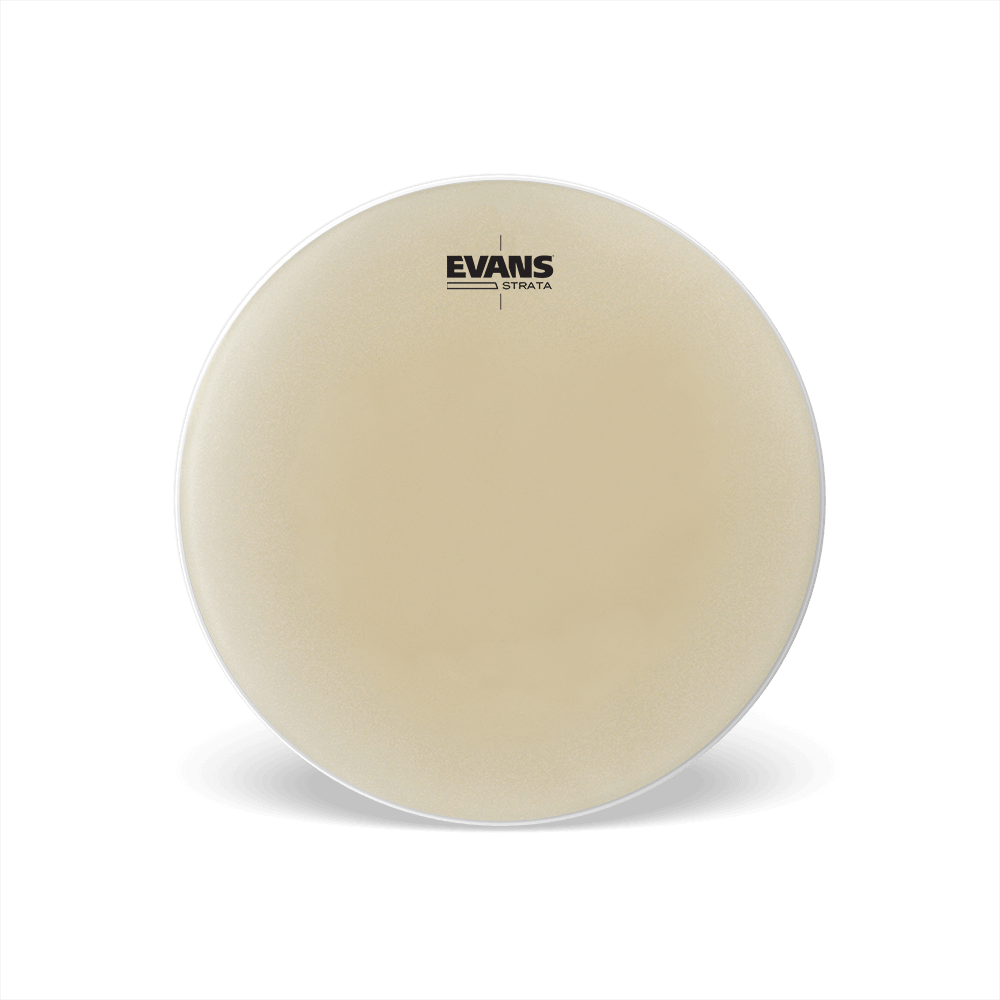
Strata Series. Represents the sound and feel of traditional calfskin heads. A "coated" head, calfskin colored. Warm, dark, focused.
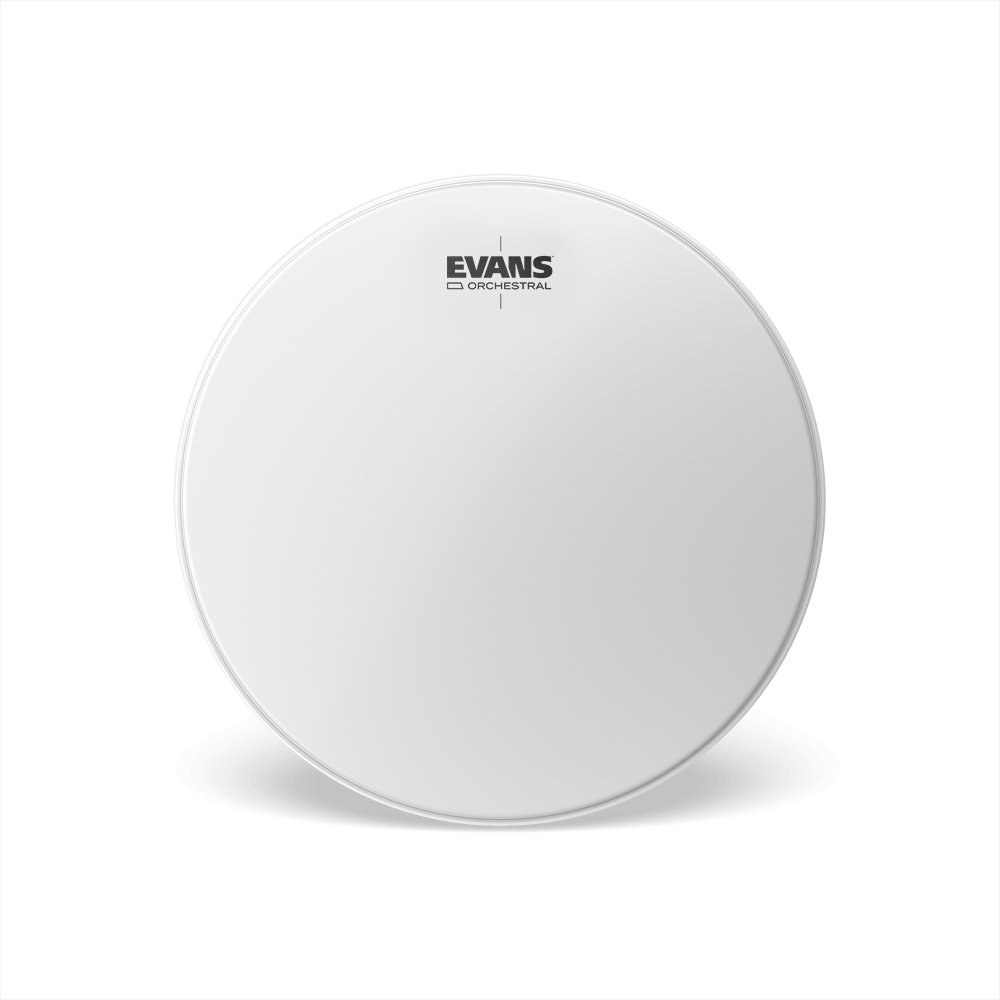
Orchestral. A "clear" head, white / opaque colored. Bright, clear, more sustained.
Remo
Remo has 3 series, all available in a Clear or Hazy texture.
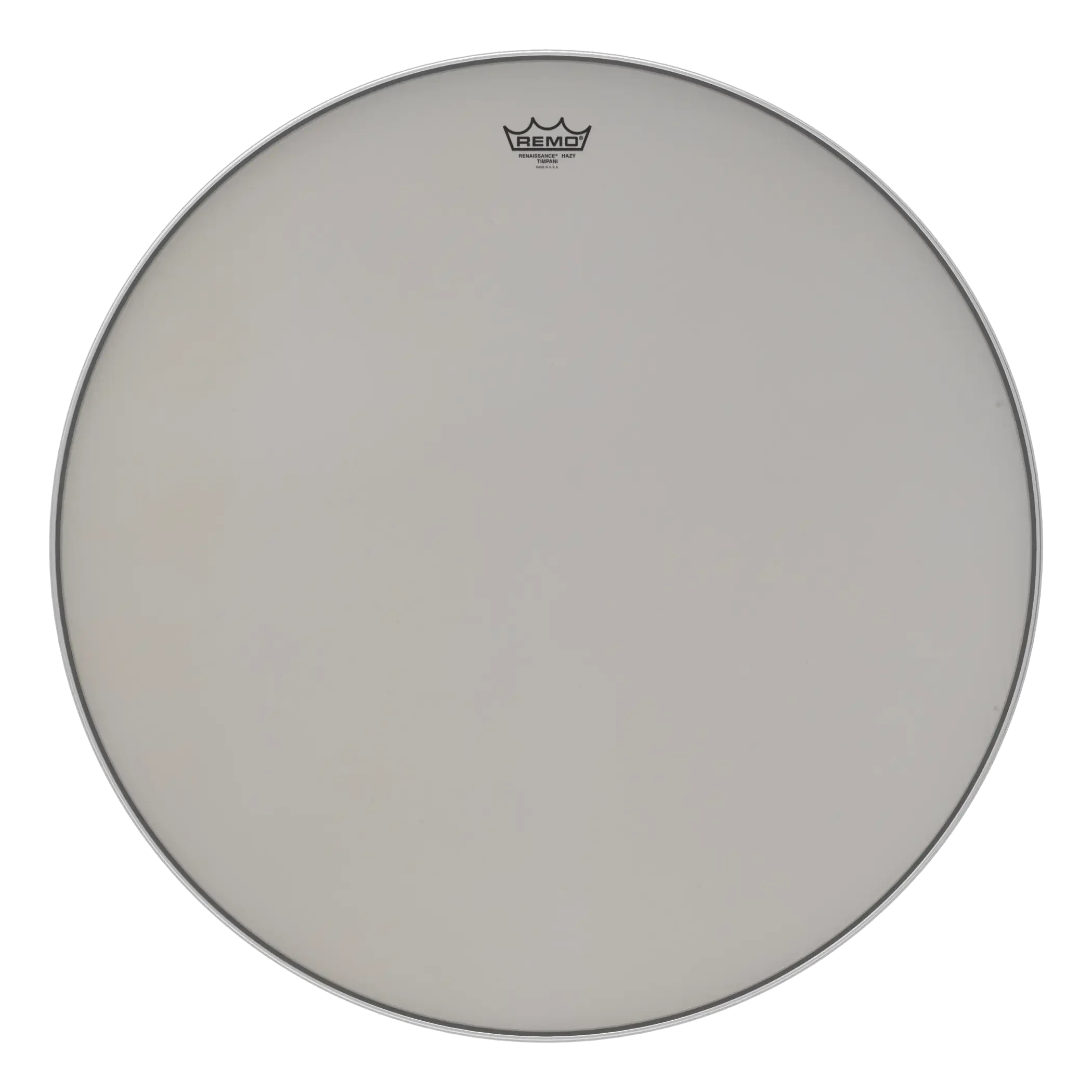
Renaissance Series (RC-Series). Professional grade timpani head. Available in Clear and Hazy; clear heads have a frosted appearance. Available with inserts. Most expensive.
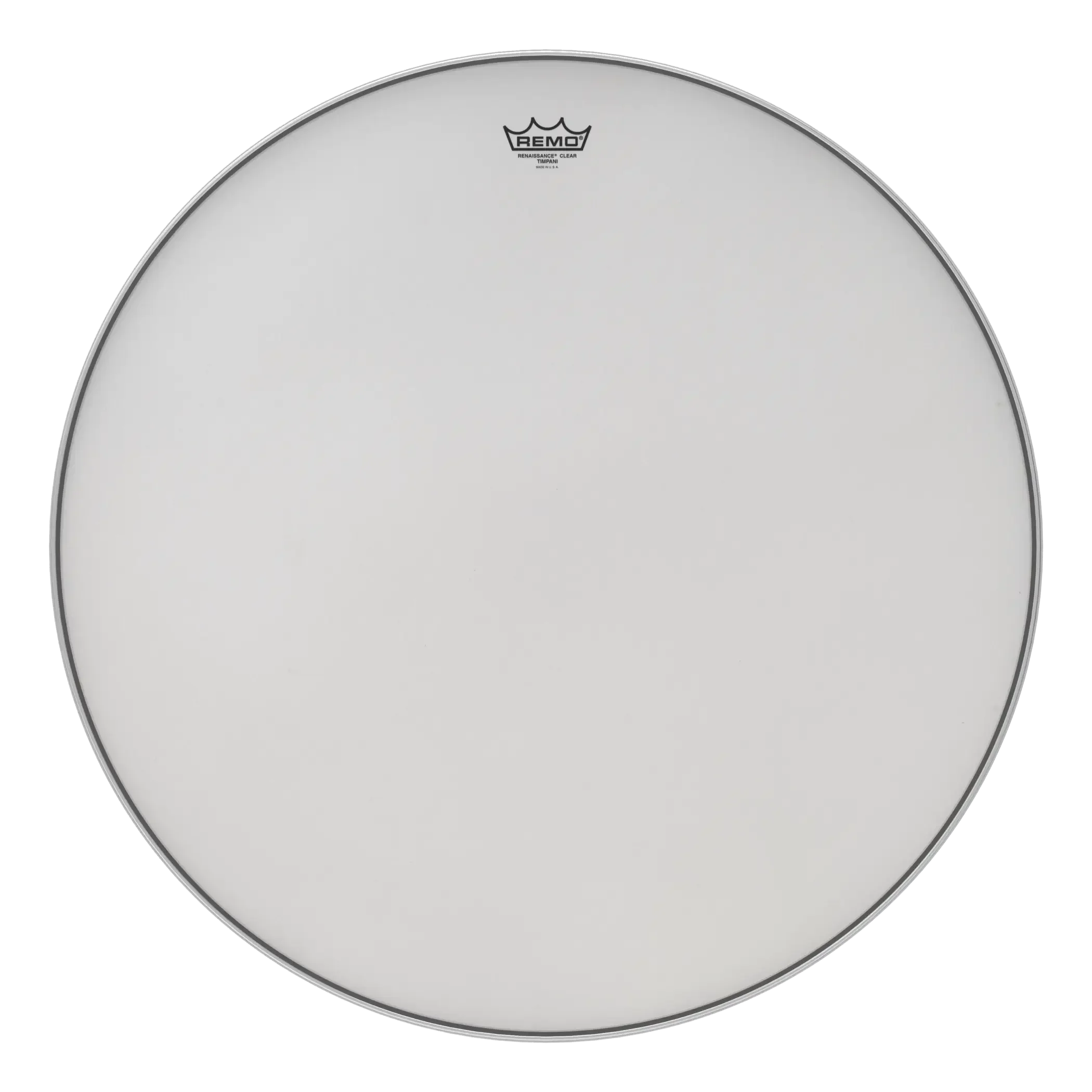
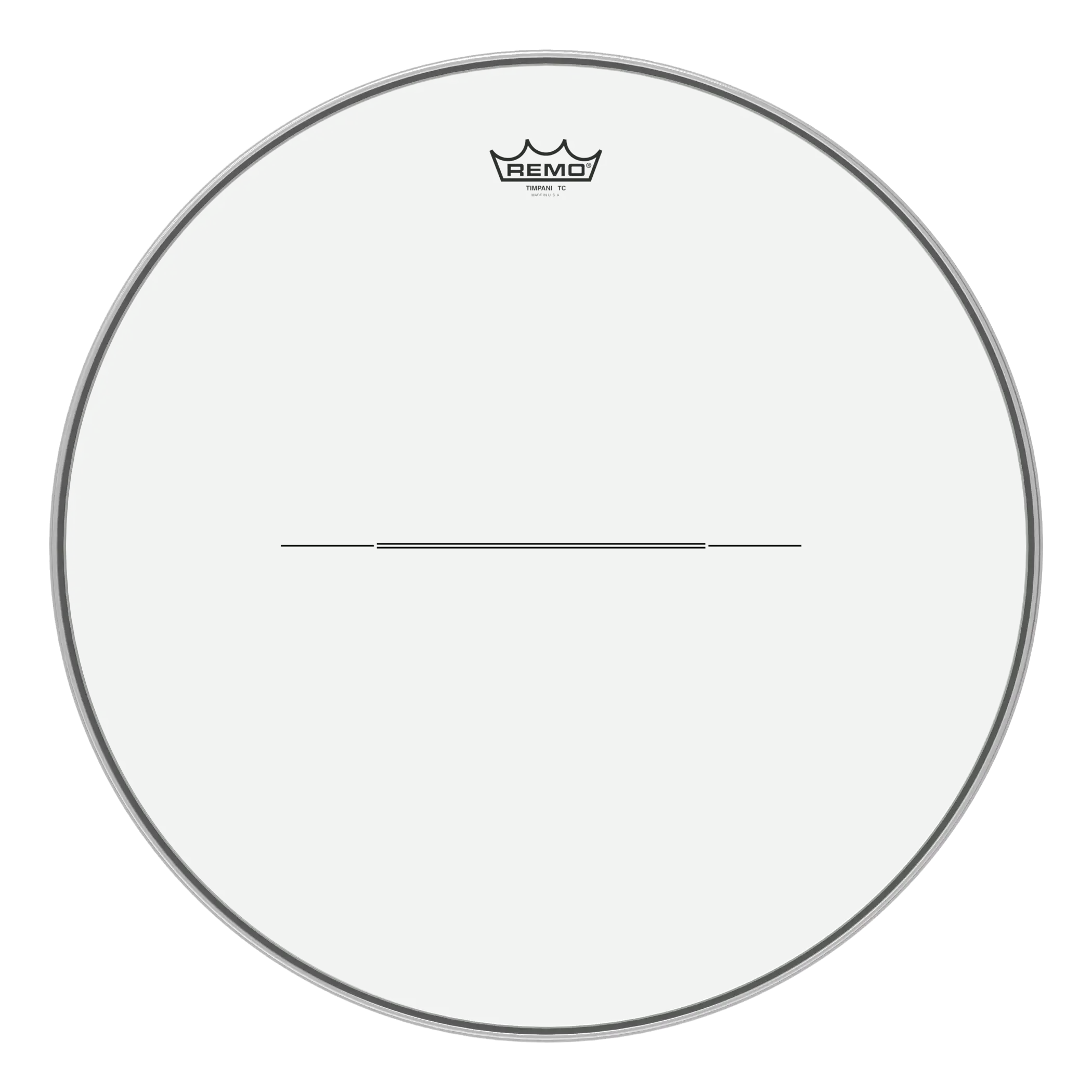
Custom Series (TC-Series). A higher end version of the standard series. Available in Clear and Hazy; clear heads are fully transparent. Available with inserts.
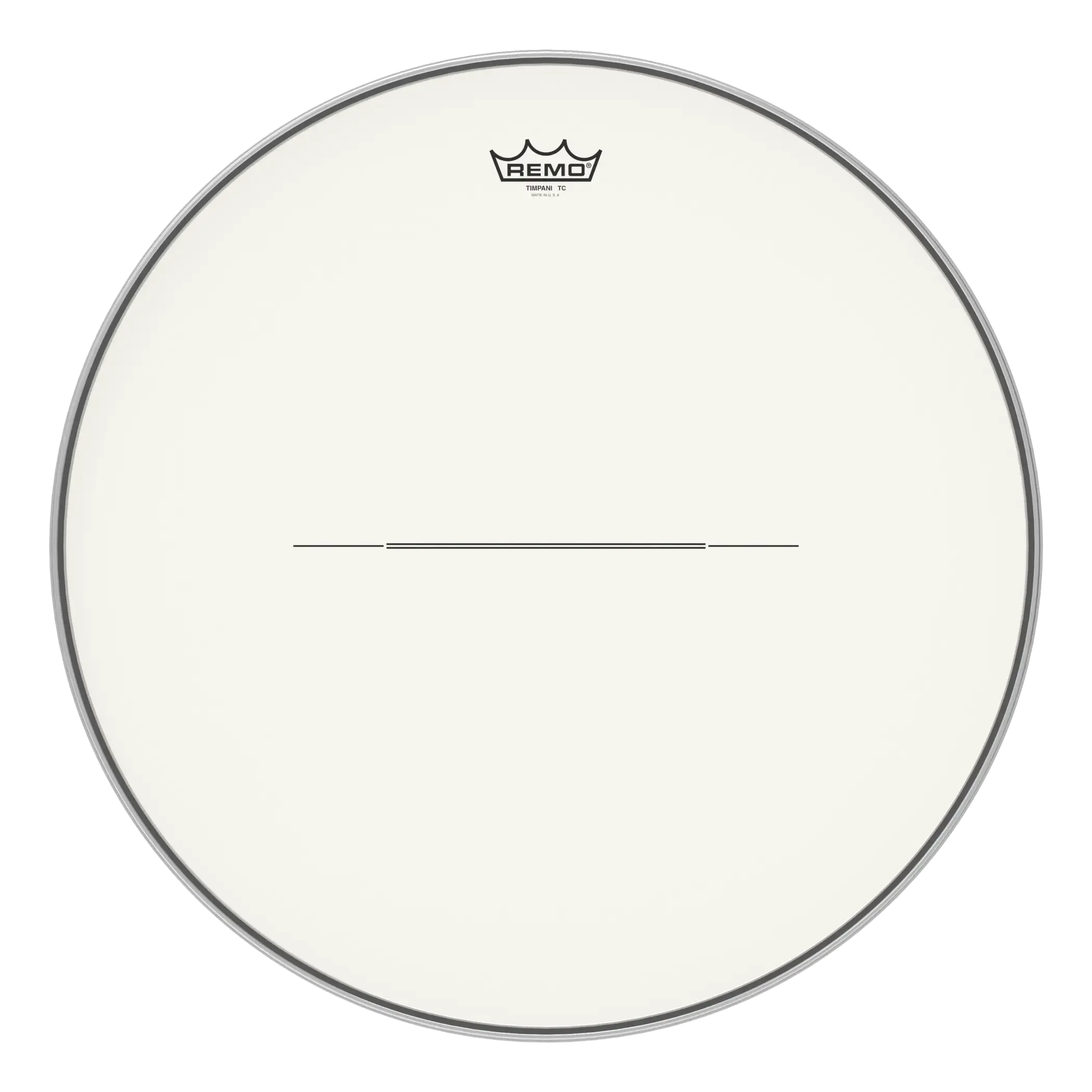
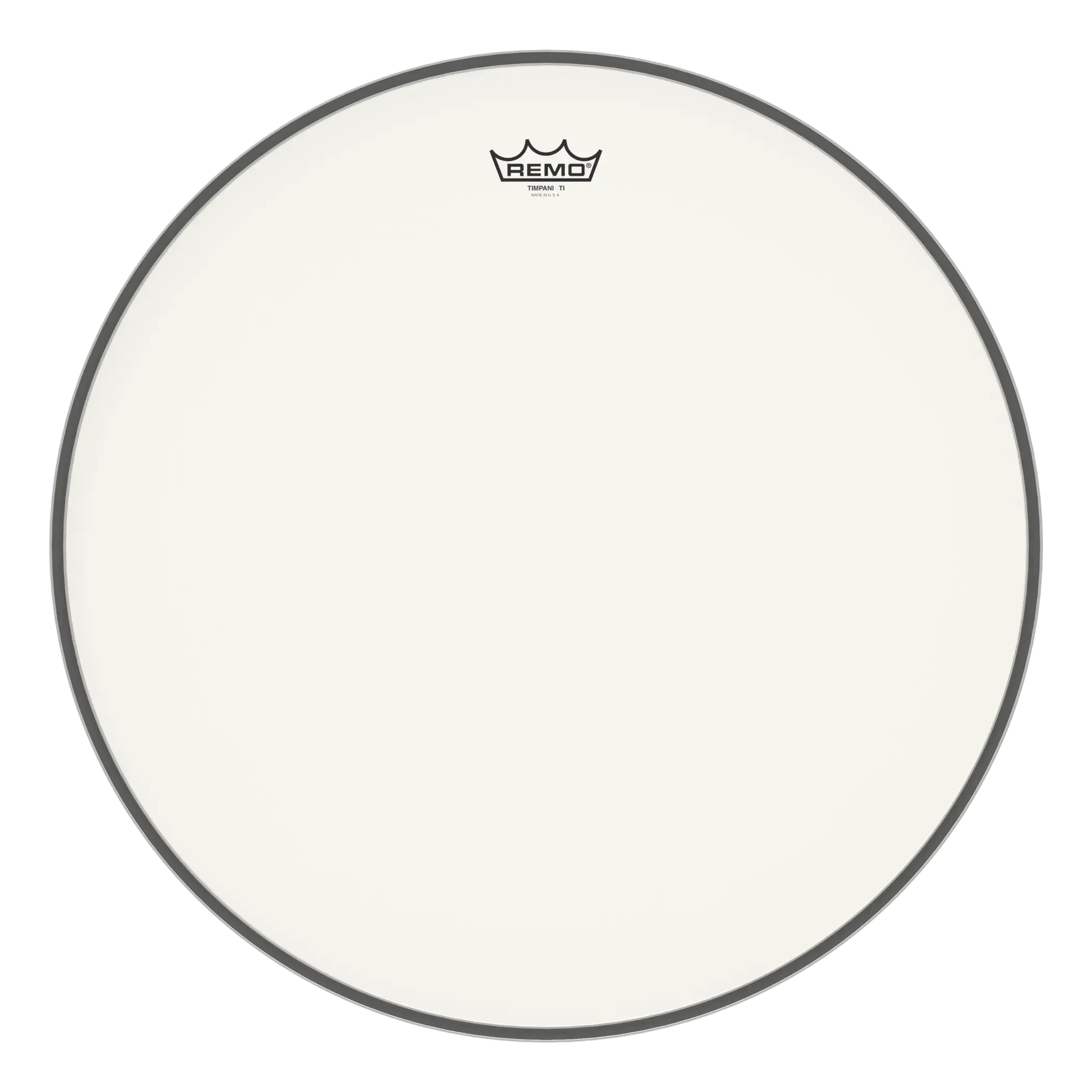
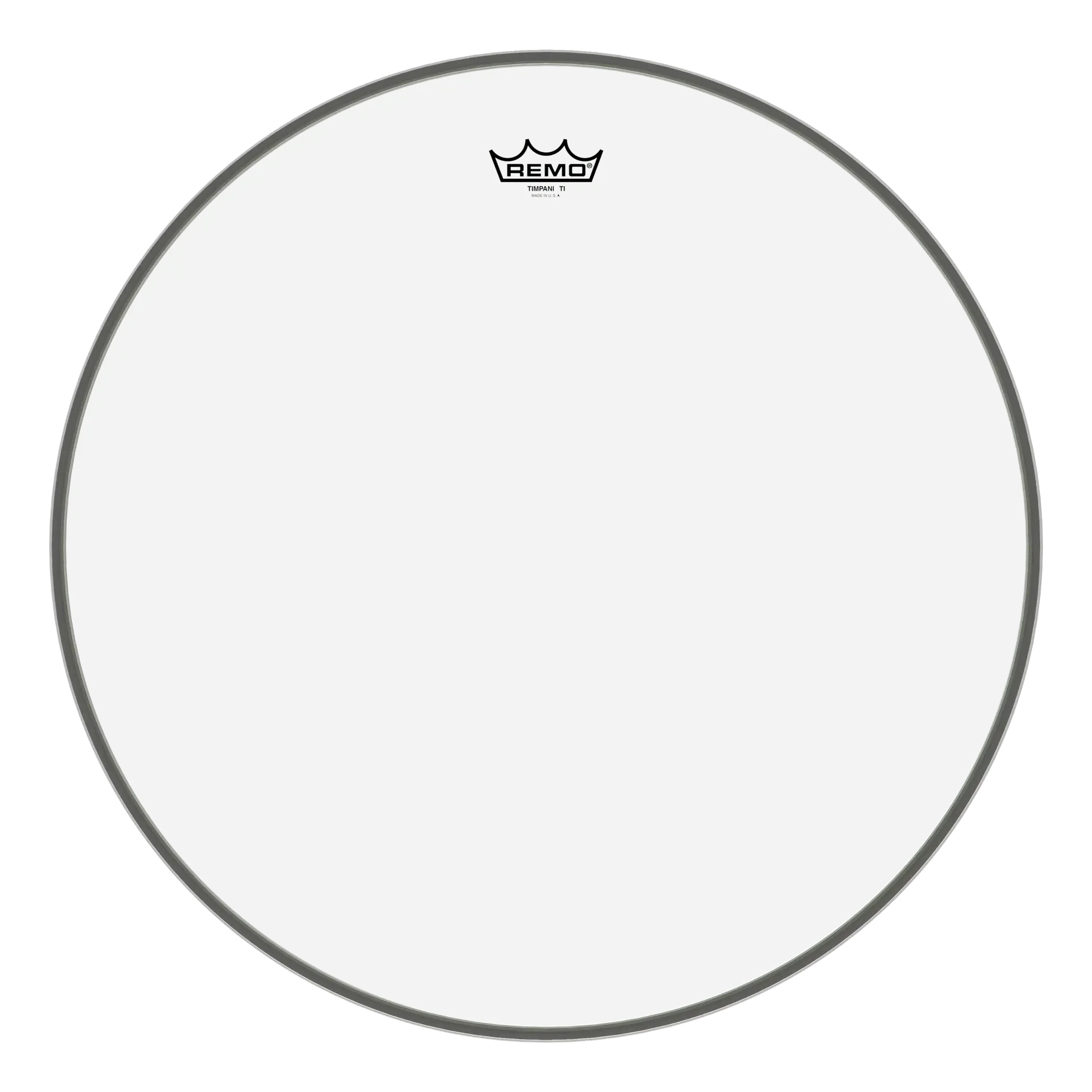
Standard Series (TI-Series). The baseline timpani head. Available in Clear and Hazy. Clear heads are fully transparent. Inserts not available. Most cost efficient.
Choosing an insert
On calfskin heads, the hide is tucked around a metal hoop. We call that metal hoop the "flesh hoop." That term has transferred over to synthetic heads, and it refers to a "U" shaped hoop made of aluminum where the Mylar is glued in place. In simpler terms, it's the metal hoop around the outside of the timpani head.
What's the purpose of an insert?
Stick with us here, we're about to get nerdy.
The "U" shaped piece of aluminum is flexible, and that means it does not stay consistently flat between the tension rods of the drum. This creates a different pitch between the tension rods, as there is less tension on the head halfway between the tension rods. In other words, you can match the pitch at each tension rod, but the pitch in between the tension rods won't be the same.
Insert... inserts. Inserts help to add rigidity around the flesh hoop, which creates a consistent pitch between the tension rods, making the drum sound more clear (have a better pitch).
Insert materials
Inserts can be made of either steel or aluminum. Steel offers more rigidity, and aluminum offers a bit of flexibility for drums and counter-hoops that aren't perfectly round or flat. Here's the difference between the three options.
Steel inserts
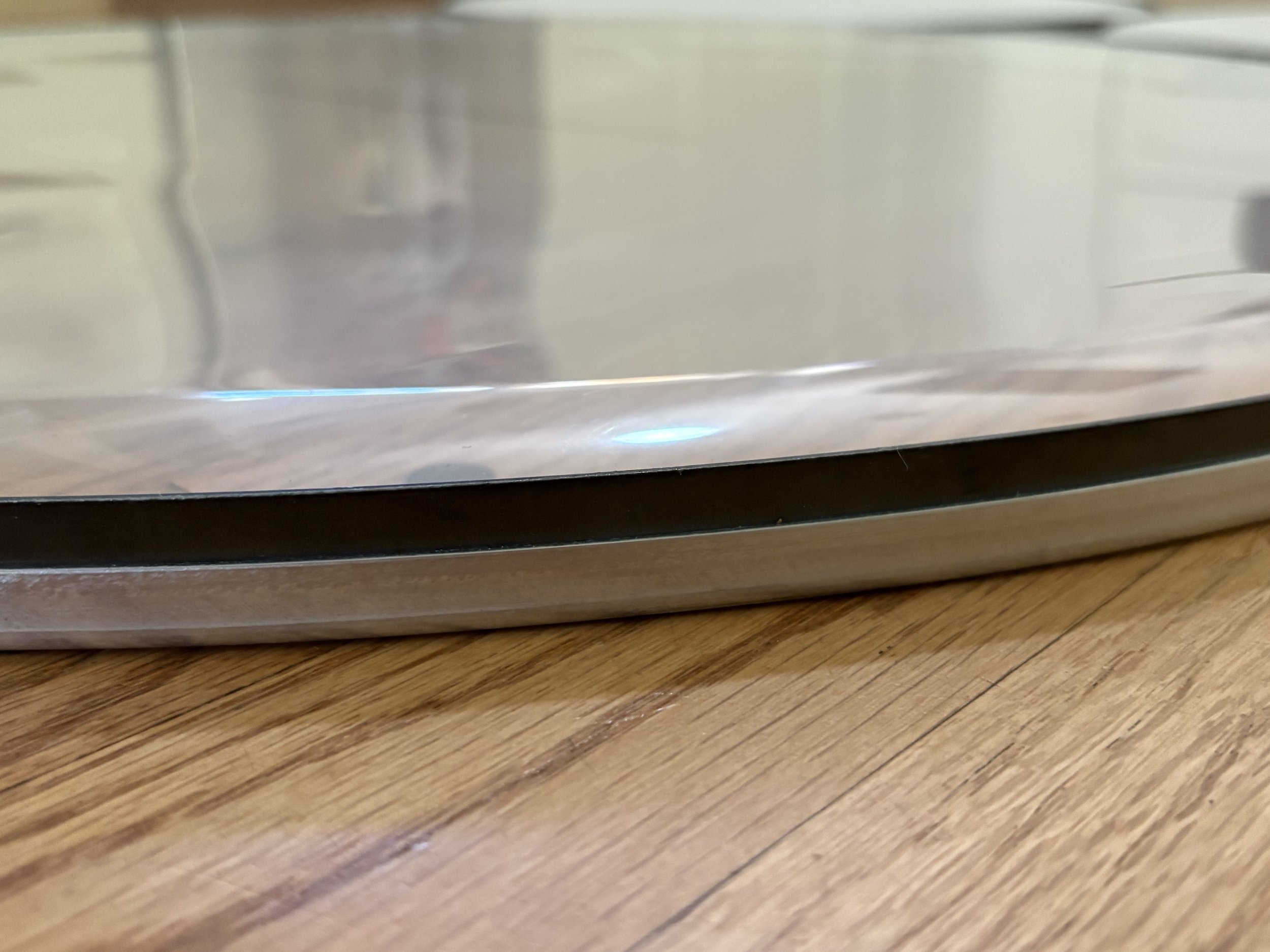
Taller / high profile. Increases the projection of the drum. Does not fit all timpani; the tension rods will not reach their casing. This mostly applies to older, regular collar timpani.
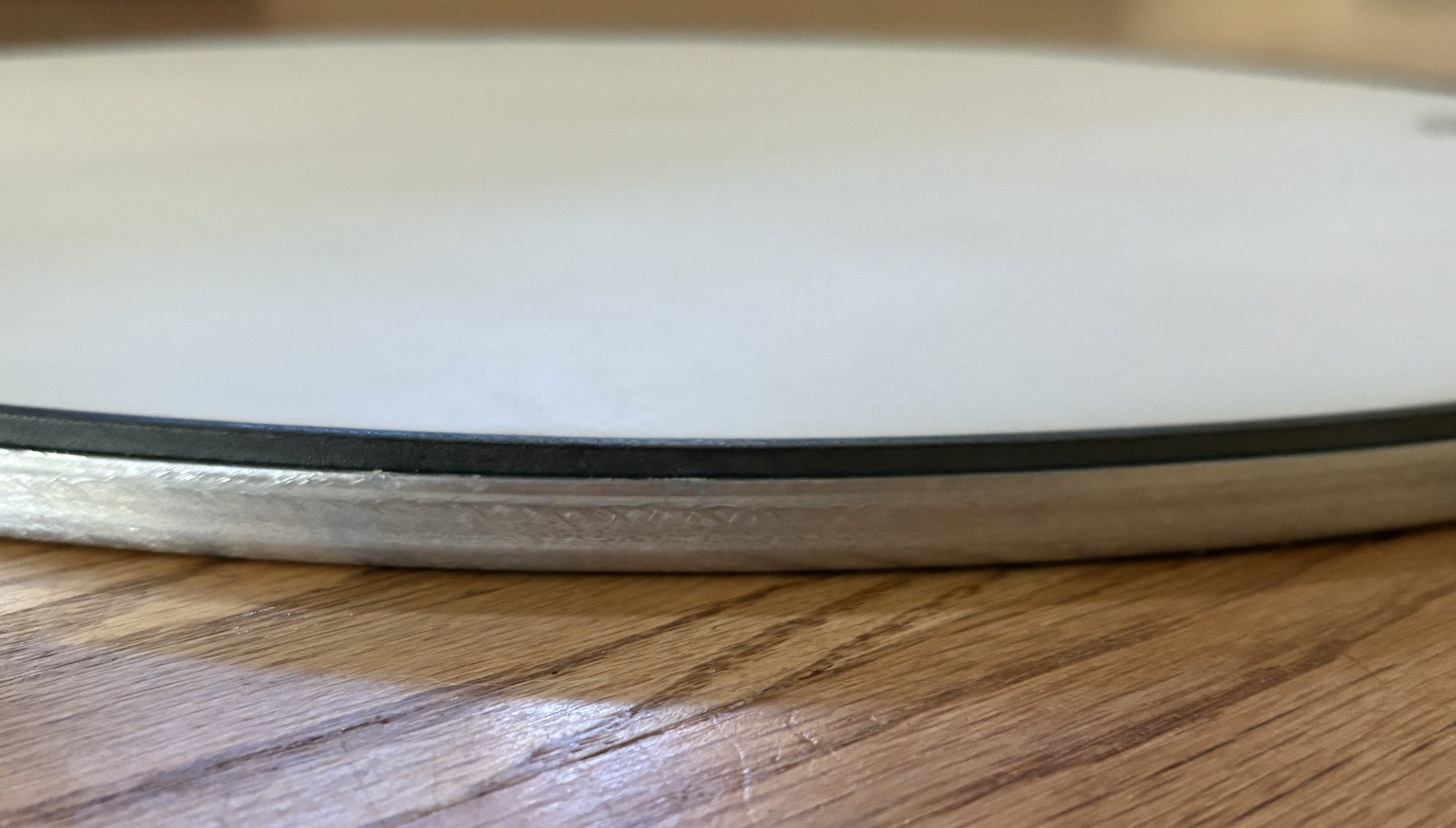
Low-profile steel inserts
Shorter, and about twice as thick as the original. Designed to accommodate a wider range of modern timpani models. Improves projection.
Aluminum
Provides rigidity so the head maintains its round shape. Corrosion resistant. Standard insert for timpani manufacturers like Adams and Yamaha.
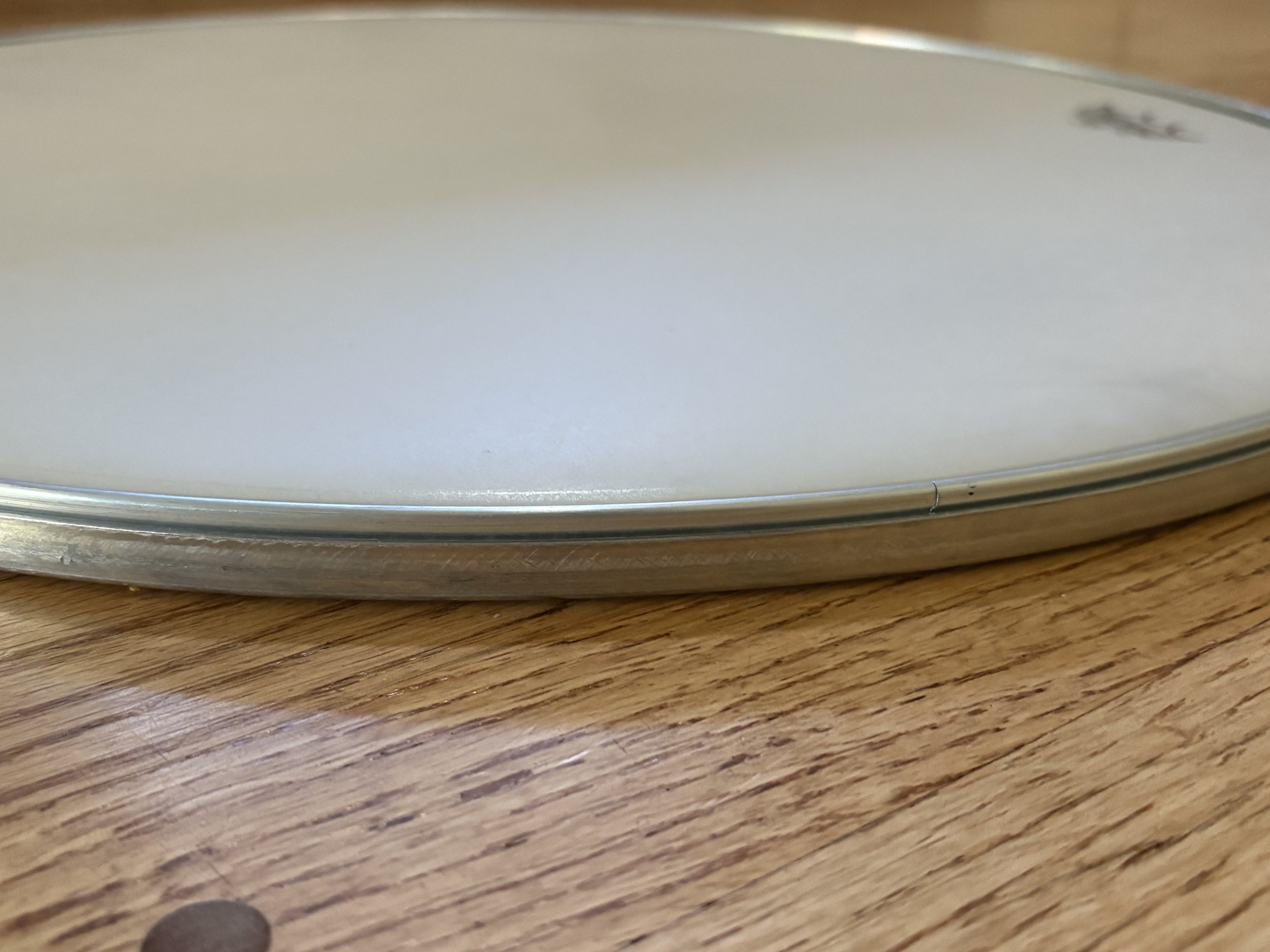
Evans vs. Remo
Evans uses a standard low-profile steel insert ring on all of their heads, while Remo has all three of the listed options.
If you'd like help matching an insert and coating to your drums before you order, reach out and we'll walk through it with you.
Want an expert to walk you through it live?
Ordering the right head is half the job. Hop on a video call with us and we'll walk you through the actual head change, start to finish, so you know it's seated, cleared, and tuned the right way the first time.
You did it!
Congrats, you now know what type of timpani head you need and can confidently order your timpani heads.
Here are a few other details that may help in the ordering process.
SKU (Stock Keeping Unit)
This is the number that retailers use to keep track of what head is in the box. It normally consists of a series prefix, the size of the head, and the type of insert and film, if applicable.
Evans
Series Prefix + Diameter (in inches)

Series Prefix: ET = Orchestral Heads, EST = Strata Heads. Diameter: the final numbers represent the head's exact diameter in inches (29 inch = 29, 24 1/4 inch = 2425, 26 1/2 inch = 2650).
Remo
Series Prefix + Diameter Code + Insert/Film Suffix
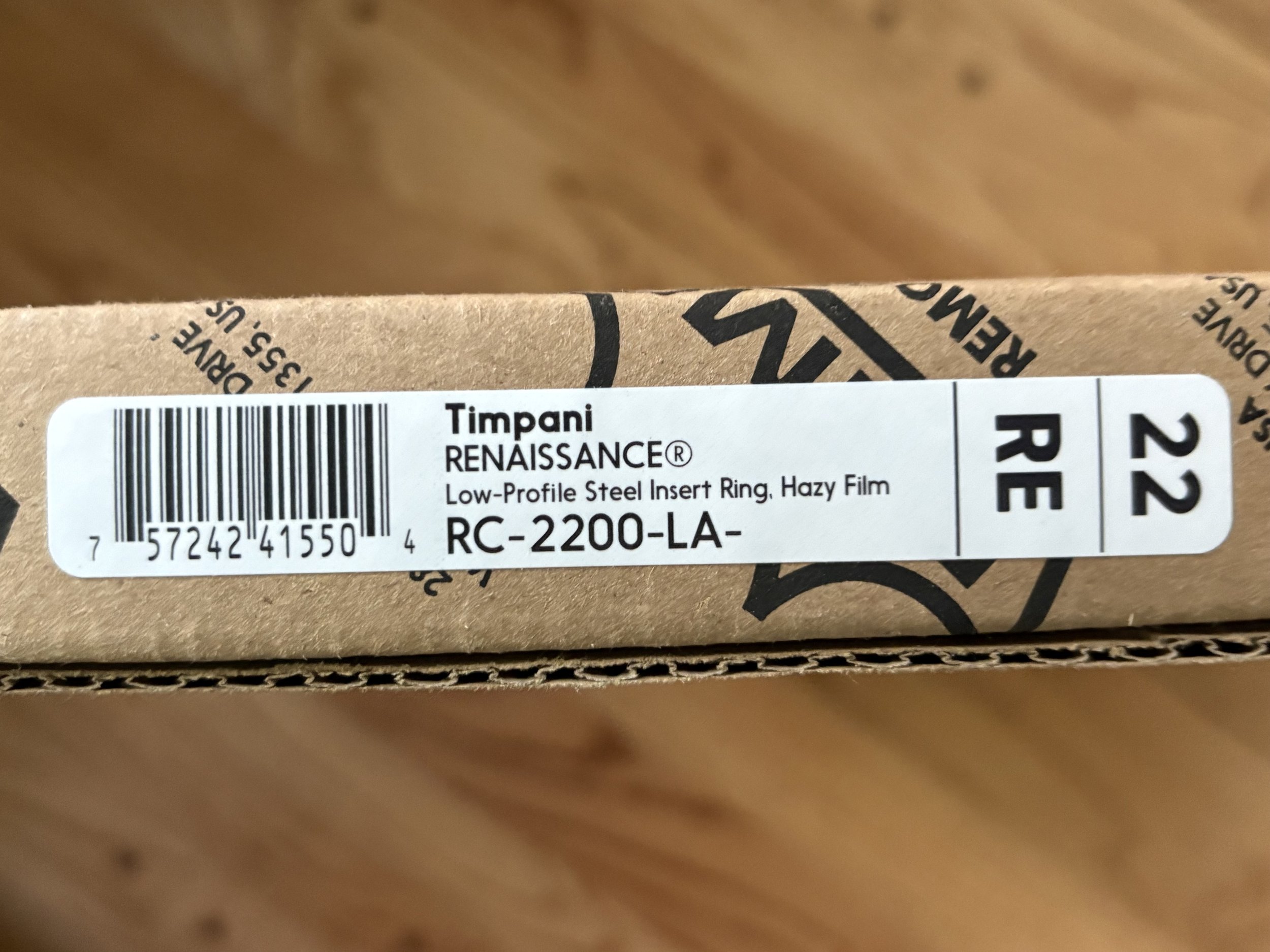
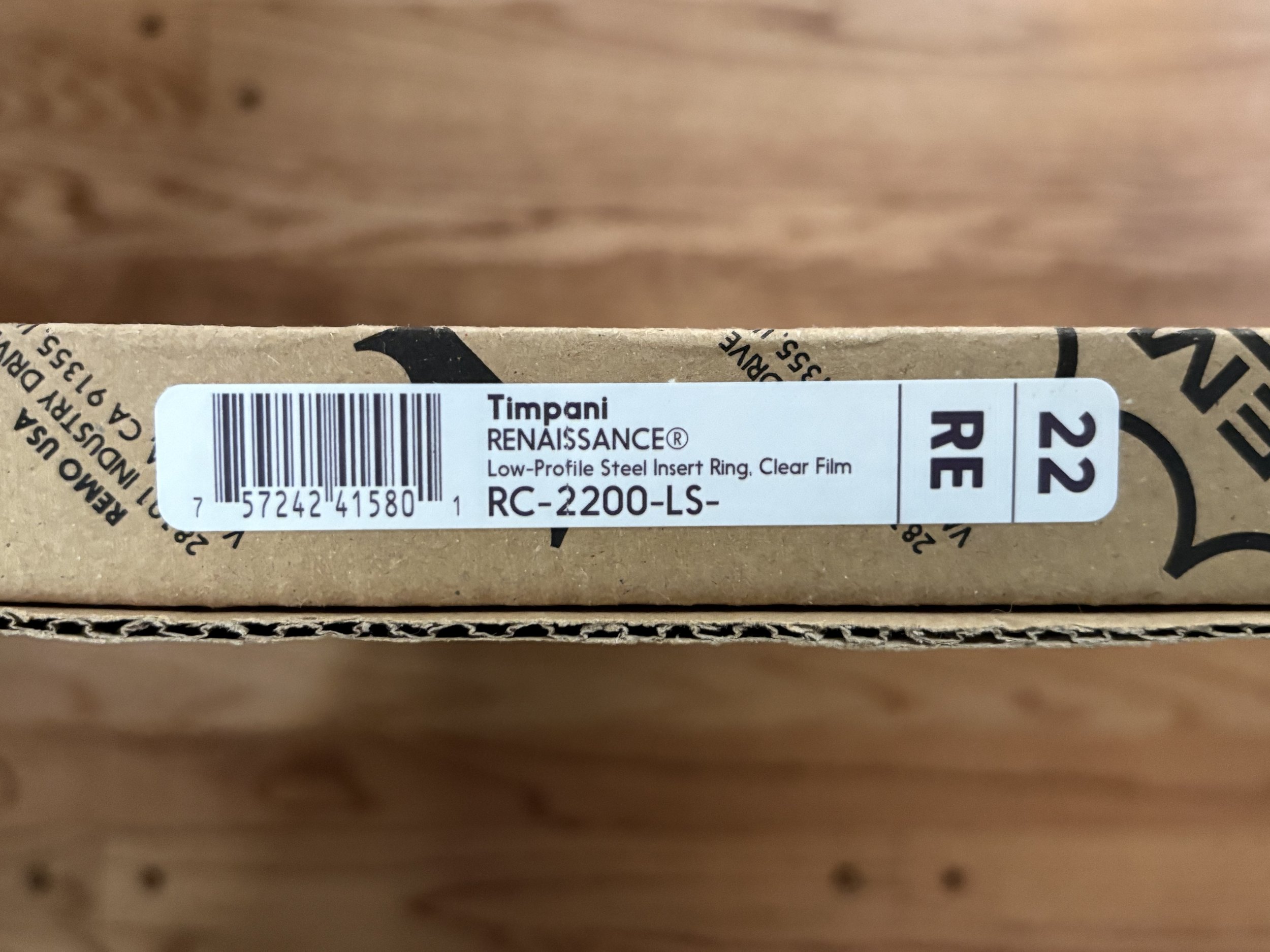
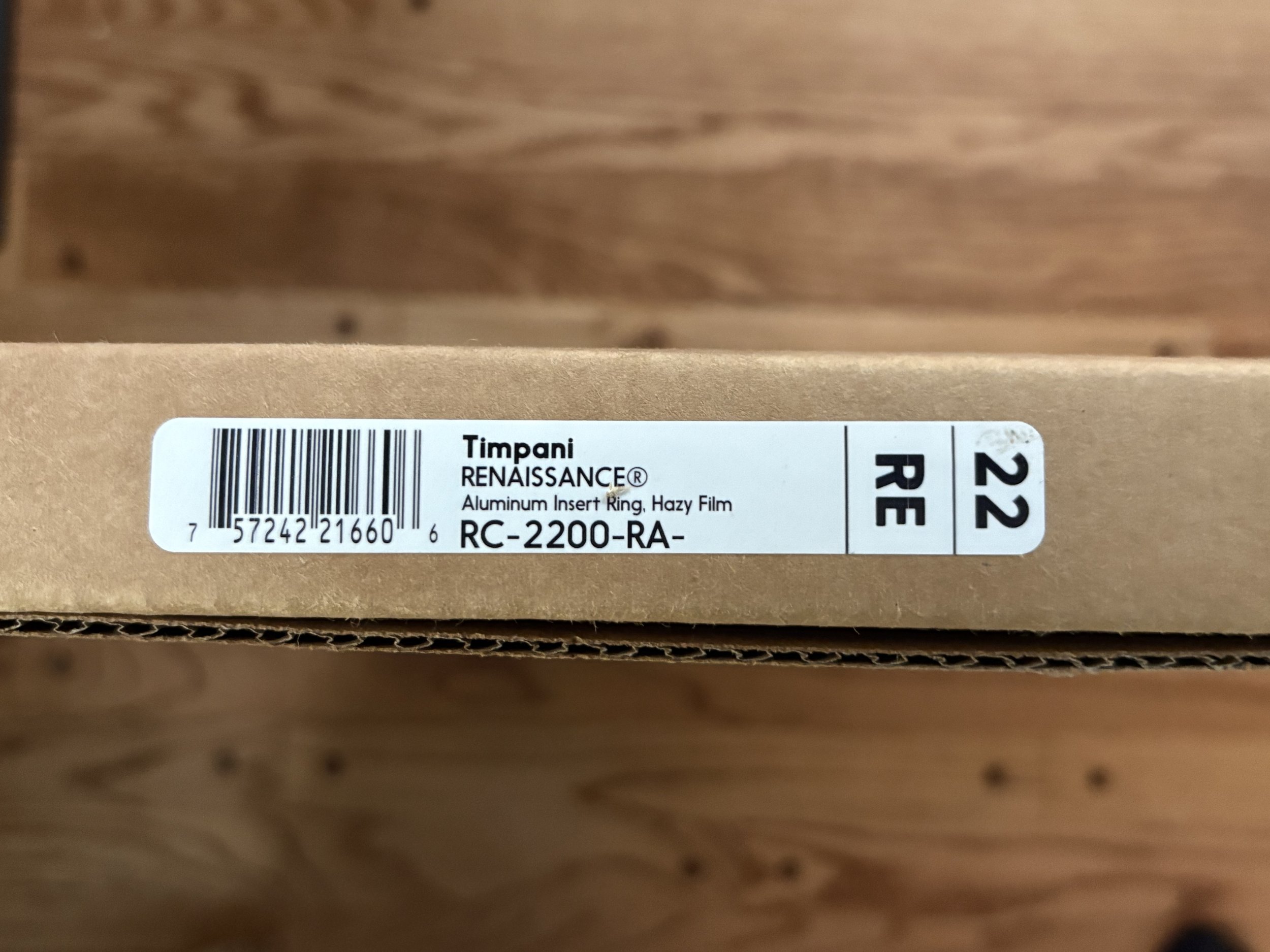
Series Prefix: RC = Renaissance Series, TC = Custom Series, TI = Standard Series.
Diameter Code: based on 1/16" increments of the outside diameter of the flesh hoop. Whole inches: a whole number size is multiplied by 100 (28 inch = 2800, 31 inch = 3100). Fractional inches: the final 2 digits represent the number of sixteenths past the whole inch (28 1/2 inch = 28 8/16 inch = 2808; 23 1/4 inch = 23 4/16 inch = 2304).
Insert Ring, the first letter of the 2 letter suffix: Aluminum = R, Low-Profile Steel = L, Steel (high profile) = S, No Insert (Standard Series only) = 00 (hazy) or 03 (clear).
Film Type, the second letter of the 2 letter suffix: Hazy = A, Clear = S.
Examples
Evans
- EST3400: 34" Evans Strata Timpani Head
- EST2425: 24 1/4" Evans Strata Timpani Head
- ET29: 29" Evans Orchestral Timpani Head
- ET2650: 26 1/2" Evans Orchestral Timpani Head
Remo
- RC-2800-LA: Renaissance (RC), 28" head (2800), low-profile steel insert (L), hazy film (A)
- TI-2508-00: Standard Series (TI), 25 8/16" head (2508), no insert (0), hazy film (0)
- TC-2200-SS: Custom Series (TC), 22" head (2200), steel insert, high profile (S), clear film (S)
What different companies use
These are the heads different manufacturers put on their drums at the factory. Their heads may look a slightly different color from what you can buy as a consumer, and their heads will also have their logo on them.
- Adams: Remo Renaissance Hazy with aluminum inserts
- Ludwig: Ludwig Ensemble Smooth White Timpani Head (made by Remo)
- Majestic: Remo Renaissance Hazy with aluminum inserts
- Yamaha: Remo Renaissance Clear with aluminum inserts
Still not sure which head is right for your drums?
You're a pro on timpani heads now, but if anything is still unclear, send us your make, model, and bowl size and we'll tell you exactly what to order. No guesswork, no wrong-size heads showing up on your doorstep.