Snare drums are a simple concept. They have a batter head on top, a resonant head on the bottom, and snares that can be turned on or off. They are a staple in any band or orchestra as they add depth, rhythmic structure, and texture but with all of the snare options out there, how do you know which drum to use for full ensemble, chamber groups, solos, and auditions?
Understanding the nuances of snare drum choice, drum size, head selection, overall tuning, snare selection/tension, and muffling techniques will make your drum stand out or blend in as needed.
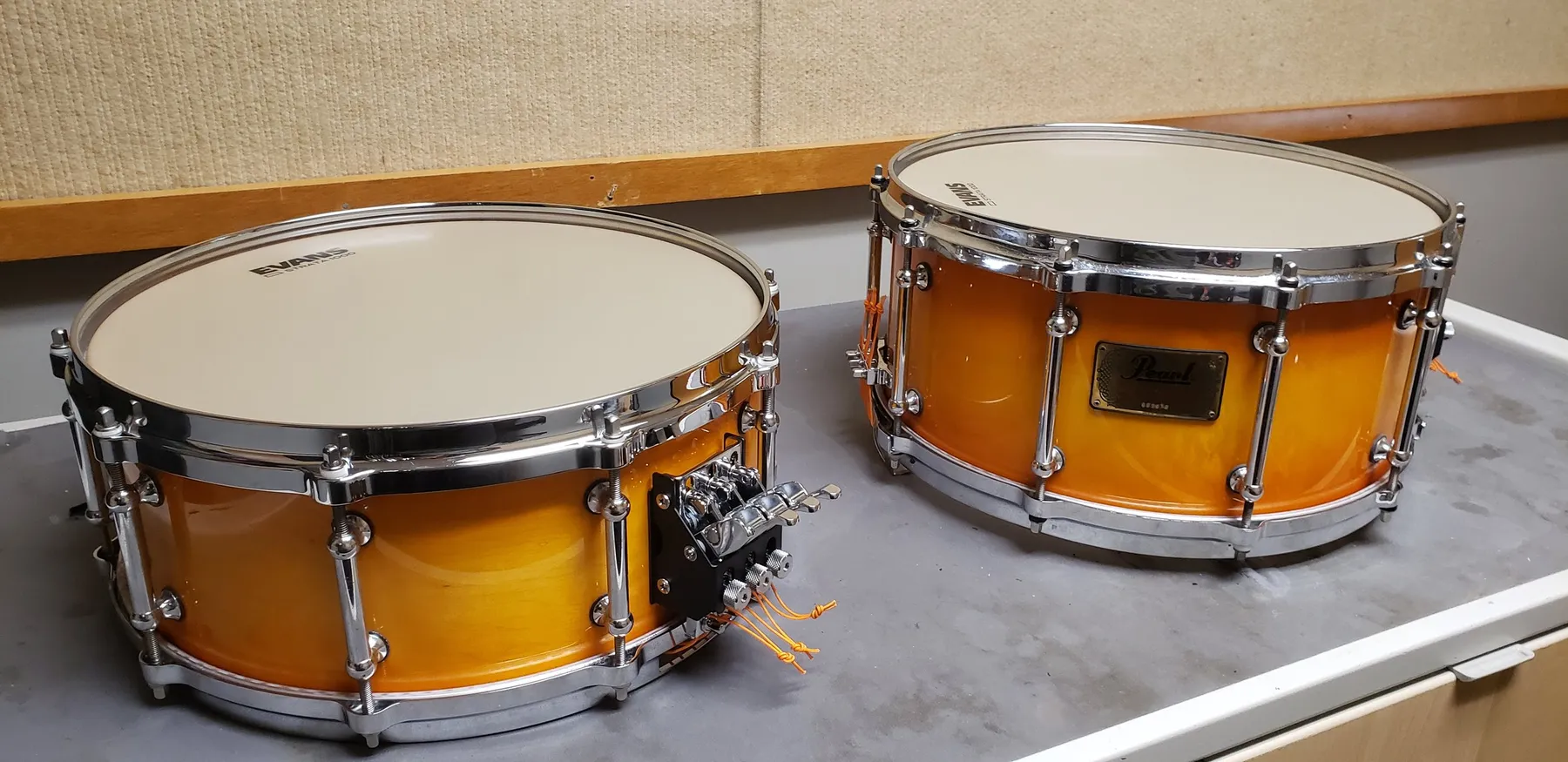
1. Snare Drum Choice: Finding the Right Fit
Choosing the right snare drum is fundamental to achieving your desired sound. Here are some key considerations:
a. Material Matters
Wood vs. Metal: Wooden snares (maple, birch, or mahogany) generally provide a warmer, more resonant sound, making them ideal for softer passages. Metal snares (brass, steel, or copper) deliver a brighter and sharper attack, which can cut through ensemble textures. Select based on the musical repertoire and the sound you want to project.
b. Brand and Model
Different brands have distinct tonal qualities. Explore various models at your local shop or music convention to find one that suits your style. Common brands like Pearl, Yamaha and Black Swamp Percussion offer a range of diverse playing preferences for you and your ensemble. If you're budgeting for a new snare alongside the rest of your section's gear, our guide to building a percussion repair schedule and budget walks through planning that spend.
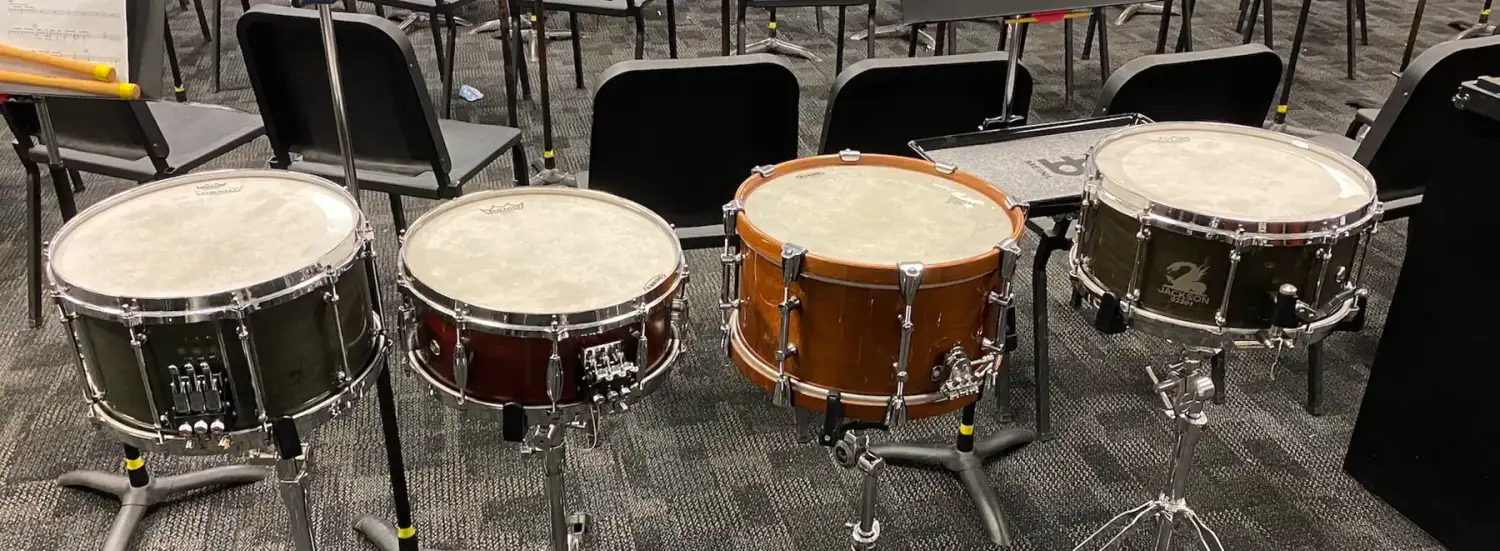
2. Snare Drum Size: The Impact of Dimensions
The size of your snare drum can significantly affect its sound and playability.
a. Standard Sizes
Most orchestral snares are 14" in diameter, but you may encounter sizes ranging from 13" to 16". A 14" snare is versatile for different playing styles, while a 15" or 16" snare offers a deeper, fuller tone that can be advantageous in larger ensembles or a contrasting musical style.
b. Depth
The depth of the drum also plays an important role. Shallower drums tend to have a sharper attack and quicker response, while deeper drums produce a warmer, rounder sound. Choose a depth that complements your playing dynamics and the music you'll be performing.
Let Full Season Shield handle it for you
Our year-round percussion maintenance plan keeps every snare drum in your section tuned, muffled, and ready to play, so you can focus on the music instead of the upkeep.
3. Head Choice: Building Your Sound
The drumhead is a critical component in shaping your snare's tone. Here's how to make the right choices:
a. Top Heads
Coated vs. Clear: Coated heads (like the Remo Ambassador or Evans G1) provide warmth and a controlled sound. Clear heads offer more projection and brightness, which can be beneficial in louder settings but may require careful tuning to manage overtones.
b. Thickness and Response
Thinner heads respond better at lower dynamics, while thicker heads offer durability and projection. Consider the style of music and your playing technique when selecting head thickness.
c. Bottom Heads
The bottom head is crucial for resonance and sensitivity. A thinner, more resonant head will enhance the overall response of the drum. Ensure that it complements your choice of top head for a balanced sound.
4. Tuning: Achieving the Right Pitch
Proper tuning is essential for maximizing your snare drum's sound potential.
a. Tuning Technique
Start by loosening all tension rods slightly. Find the tension rod with the highest pitch and match the pitch of the others to this tension rod. This helps avoid unwanted overtones and ensures a balanced sound. It's the same clearing method covered in our timpani care guide, just on a smaller drum.
To raise the pitch of the head, tighten the tension rods in a star pattern for even tension across the drumhead.
b. Harmonic Tuning
Tuning schemes are very subjective but here are some general theories on tuning - explore different options to see what works best for you.
Tune the top head slightly higher than the bottom head for a richer tone. This creates a natural overtone balance that enhances your sound, making it more versatile for different dynamics.
Tune the bottom head a fourth or fifth higher than the top head. This creates a natural resonance as the bottom head resonates within the harmonic series of the top head.
If you need help finding the pitch of each head, this video will help.
c. Pitch Matching
Pay close attention to the pitch of other instruments in your ensemble. Tuning your snare to match the ensemble's overall pitch (often a little higher) can help ensure your sound blends seamlessly with the group.
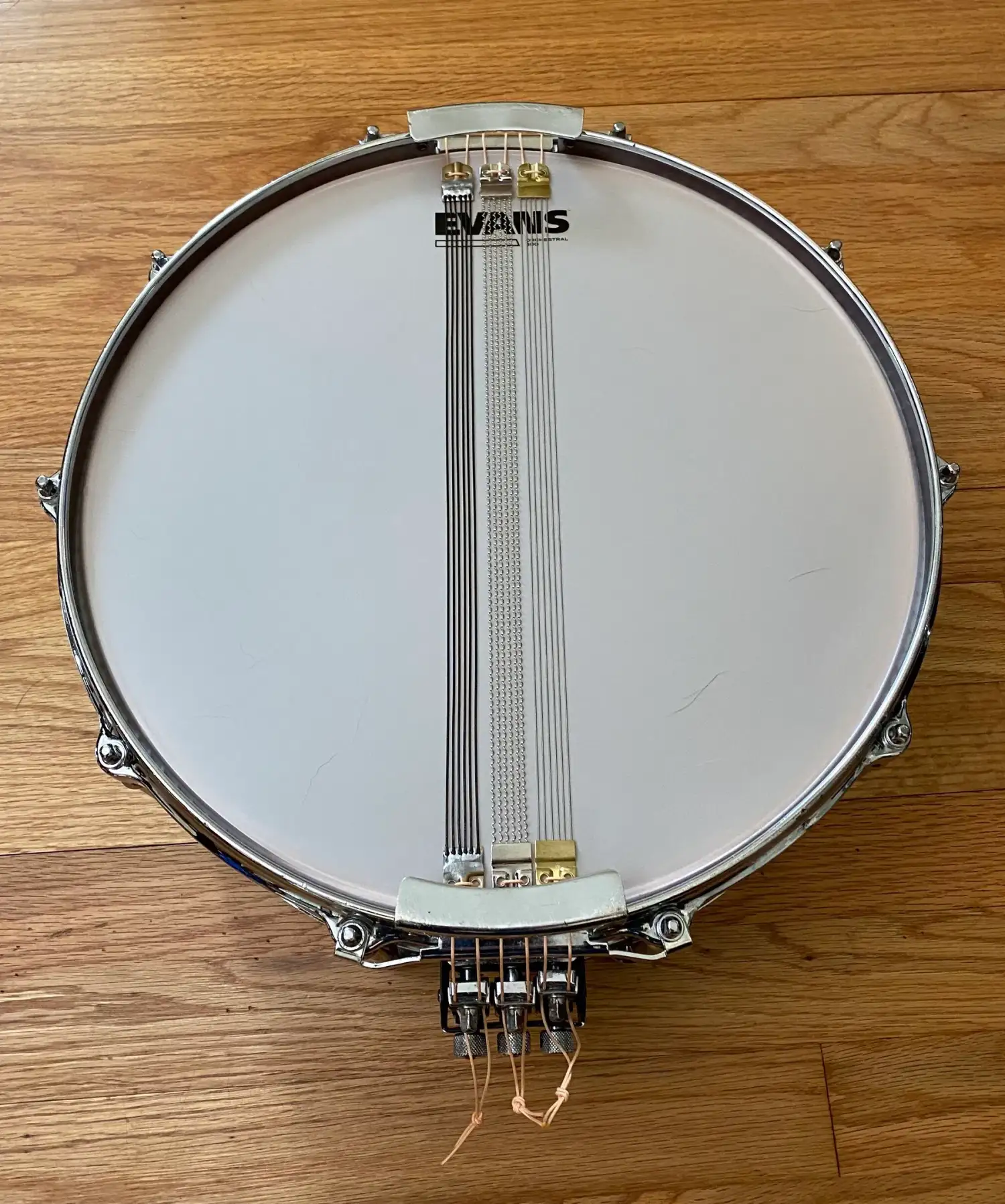
5. Snare Wires: Fine-Tuning Your Response
Snare wires greatly influence your drum's sound and sensitivity. Here's what to consider:
a. Material and Type
Steel wires offer a bright, cutting sound, while brass wires provide warmth and richness.
The more tightly wound or braided / curly snare wires will rattle less which will create a snappier snare drum sound with more pop. Use these for soft to medium volumes.
Straight wires have more sustain and create a bright and wet sound. Use these for medium to loud volumes.
Coated cables resemble older "gut" snares and are best used at a higher tension. Use these for louder volumes.
Often times having a snare drum with a multi-snare option is highly effective so you can pick and choose what wires fit the ensemble sound best. Choose your wire configuration based on the specific sound you're aiming for in your performances.
Running into something you can't quite figure out?
Whether it's an issue you can't diagnose or you just want a second opinion that you're doing it the right way, we can help. Snare drum repair is part of our standard service.
b. Number of Strands
Most snare wires range from 12 to 20 strands. More strands yield a snappier, more sensitive response, while fewer strands create a more pronounced sound. Select the right number based on your playing dynamics and preferences.
c. Installation and Maintenance
Ensure that snare wires are installed evenly and sit flat against the resonant head for optimal response. Regularly check for wear/tension level and replace them as needed to maintain sensitivity.
6. Muffling Techniques: Controlling Sustain and Overtones
Muffling can be an effective way to shape your sound and enhance clarity.
a. Physical Muffling
Using Mutes: Placing a thin piece of foam or felt on the drumhead can dampen excessive overtones and produce a warmer tone. Moon gels are another option that can dampen overtones of the drum providing a clearer warmer sound. We do not recommend using a wallet or a phone as a mute. If you've worked through tuning, wires, and muffling and still can't land on the sound you want, a virtual repair session gets you a second set of ears on the problem live.
Conclusion
Mastering the concert snare drum requires careful consideration of drum choice, size, head selection, tuning, wires, and muffling techniques. By focusing on these aspects, you can develop a sound that fits beautifully within any musical context while also reflecting your unique style. Keep experimenting, listening, and refining your approach. Each performance is an opportunity to grow as a musician. Happy drumming!