To tune a snare drum, bring the batter head to pitch in a star pattern, then the resonant head, then adjust the snare wires for crispness. Concert snare batter heads run G#-B, field drums E-G, and marching batters sit roughly B4 to E5 depending on the model. Drum-kit and jazz snares fall somewhere in between. Resonant heads typically tune a fourth or fifth above the batter, though some players go as high as a major seventh.
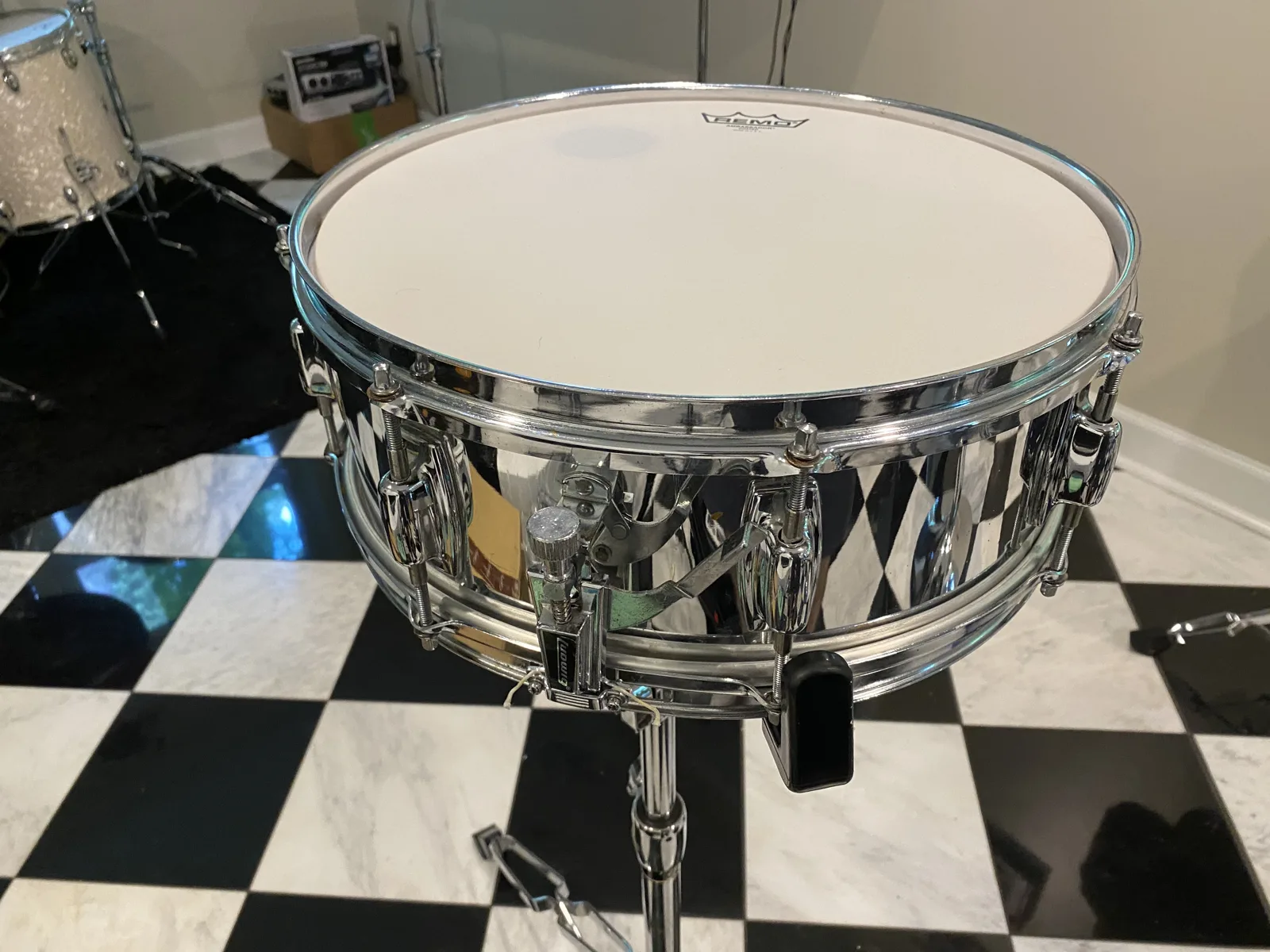
A snare drum is a snare drum: you tune the batter head and the resonant head, then adjust the snare wires for crispness. Marching snares still fit that pattern, the snare strands just get their own full tuning pass instead of a quick adjust. What changes from one context to the next isn't the process, it's the goal you're tuning toward. We've tuned snare drums of every size, in band halls, on football fields, and in jazz clubs, since 2015.
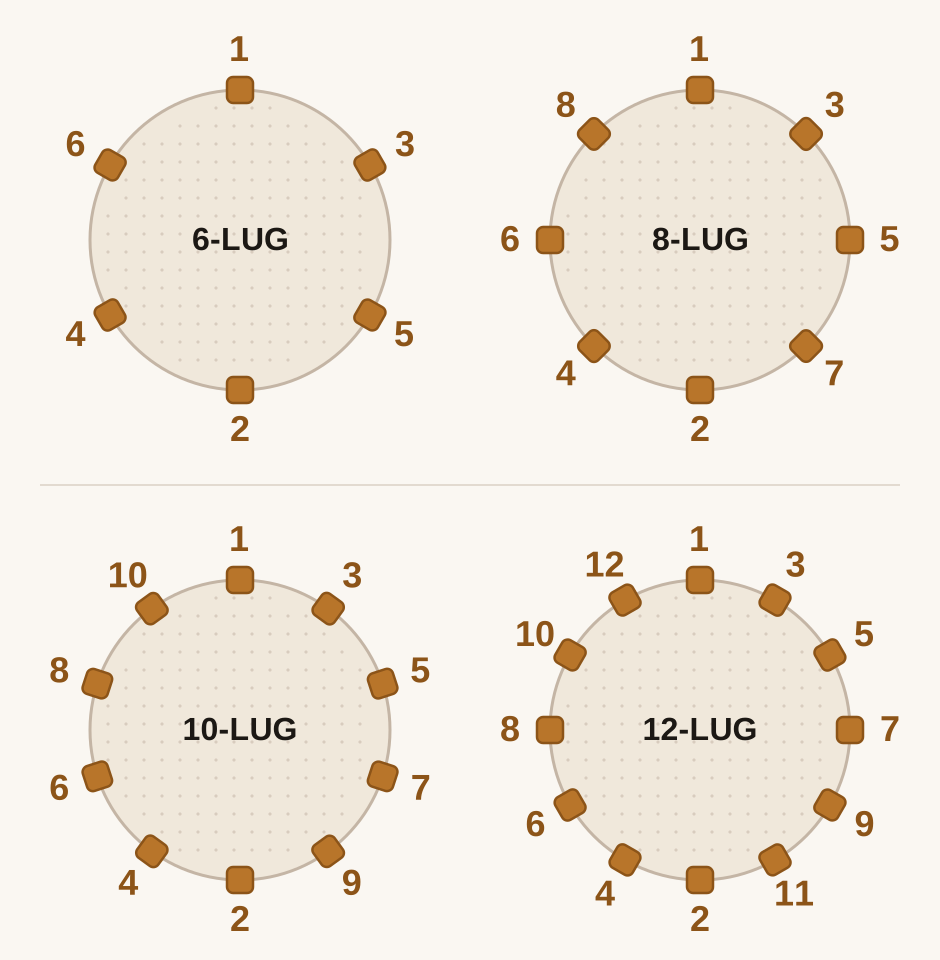
This guide skips the basics, using the star pattern to bring a head into range in the first place. If you need that part first, our full guide to tuning every drum covers it. From here, we're dialing in the actual sound.
It's a Sound, Not a Pitch
Forget hitting one exact note. A snare drum doesn't have a single correct pitch any more than a drummer has a single correct stick height. What it has is a range, and the job is finding where inside that range the drum sounds like itself: crisp, articulate, and quick to respond when the stick hits it, instead of going mushy or choked. Part of where that range sits comes from what the drum is made of: shell material affects which part of a drum's range it actually wants to resonate in, which is the idea behind the wood-versus-metal breakdown below.
The numbers on a tuning chart, or the readout on a digital tuner, are references, not guarantees. Hit the exact number and the drum can still sound flat and lifeless if the head isn't seated evenly or the shell just doesn't like that pitch. The reading tells you where the drum sits, not whether it actually sounds good.
Every size and depth of snare has its own characteristic sound. A 14x4 piccolo wants to be high, dry, and almost ticking. A 14x8 deep concert snare wants to be low and full.
Try to tune a piccolo down into a deep-concert range and you probably won't get much of a sound at all, just a flappy head with nowhere to go. It's less a wrong note and more a drum having an identity crisis it can't resolve.
The sizes and ranges below are a starting point, not a note you're obligated to land on exactly. Get into the range, then trust your ear, or ask a friend to listen from out in the room, to find the sound that's actually right for the space.
| Snare family | Typical size | Sound character | Best for |
|---|---|---|---|
| Piccolo | 13"x3.5" to 14"x4" | High, dry, almost no ring | Delicate, fast passages and auditions |
| Standard symphonic | 14"x5" to 14"x6.5" | Balanced snap and body | General concert band and orchestral work |
| Deep concert | 14"x7" to 14"x8" | Lower, fuller, more body | Loud, full-ensemble passages |
| Concert field drum | 14"x12" to 16"x16" | Deep and dark, a historic military tone | Repertoire written for that specific color |
| Marching snare | 13"x11" or 14"x12" | Tight and bright, built to carry outdoors | Drum corps and marching band |
| Drum-kit, jazz-leaning | commonly 14"x5" | Open, resonant, answers a brush | Jazz and other brush-driven styles |
| Drum-kit, rock-leaning | commonly 14"x6.5" to 14"x7" | Thick, punchy backbeat | Rock, metal, and high-volume styles |
Wood vs. Metal: What the Shell Changes
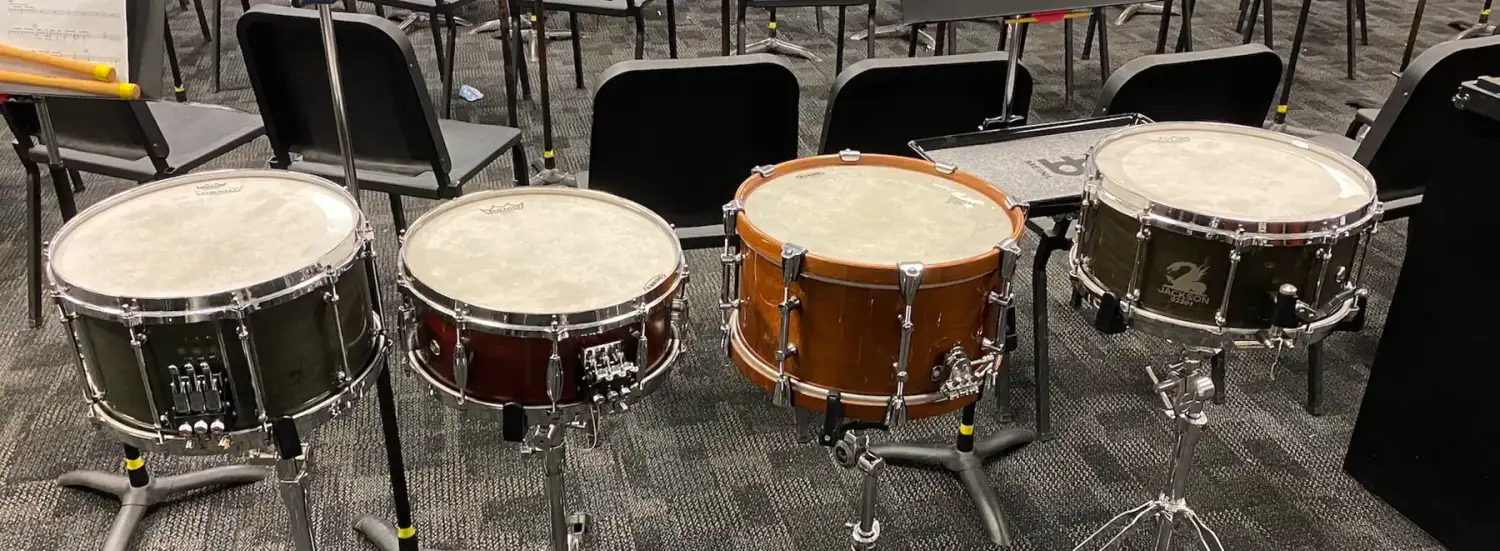
Before size and depth, the shell material sets a lot of the starting character on a concert or kit snare. Marching snares are built from wood almost exclusively, so this mostly shapes the concert and kit side of the decision. Black Swamp's own breakdown puts it plainly: wood shells run rounder and warmer, with real depth and projection, while metal shells answer back brighter and more aggressive, with more cut at every dynamic level. Titanium splits the difference, closer to metal's bite with some of wood's warmth mixed in.
Neither one is the right answer by default. A wood shell suits a part that needs the snare to sit inside the blend; a metal shell suits a part that needs to cut through on its own. Shell material and shell depth are two separate dials, not one, and everything in the size breakdowns below still applies either way.
Tuning a Concert Snare Drum
A concert snare is sized for the role it plays that day, and the three working categories, workhorse, deep, and piccolo, are really just three different shell depths chasing three different jobs.
The Standard Workhorse
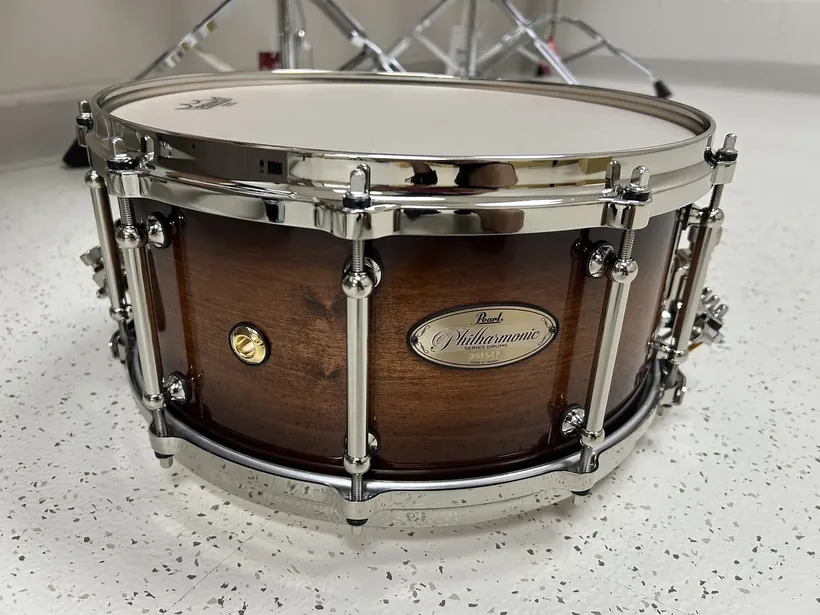
A 14"x5" to 14"x6.5" shell is the one most band programs own, and it earns that spot by being played the most: more pieces, more styles, more rehearsals than any other snare in the building. That workload means it drifts out of tune faster than the others, and it needs re-tuning toward whatever the next piece is actually asking for, not left at one setting all season. Some programs solve this by owning two, one tuned and set aside for whatever's next on the stand while the other stays in rotation. Evans' own tuning chart puts a 14"x5" batter head at G# to B and a 14"x6.5" at G to A#, with the resonant head a fourth or fifth higher.
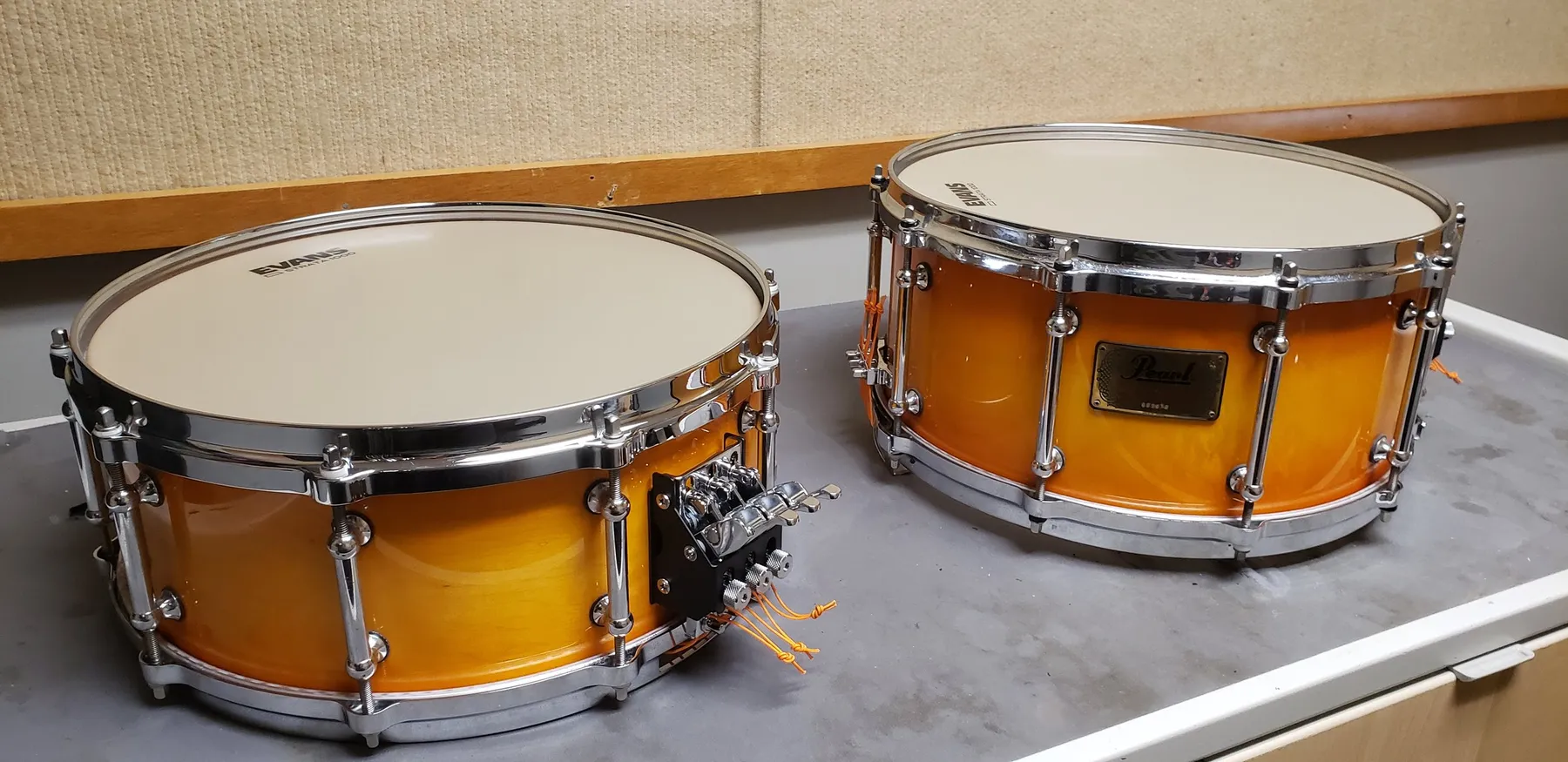
Some professional orchestral players tune the resonant head closer to a major seventh instead. It's a real, widely used alternative. Evans' chart just documents the more conservative interval, not the only one that works.
Bring the batter head up in a star pattern to the low end of that range first, then nudge it up. The aim is a surface that feels good to play on: the stroke should pop back off the head instead of thudding into it. Once it's in range, clear the head by going lug to lug and making sure the head reads the same pitch at every tension rod.
Tuning a snare drum alone in a quiet room and tuning it inside a full ensemble are two different jobs. Get it close on your own, then bring it into rehearsal and actually listen, or better, have a friend sit out in the audience and tell you how it's actually cutting or blending from out there. Adjust, then play it again.
Running into something you can't quite figure out?
Whether it's a drum that won't hold its tuning or you just want a second opinion that you're doing it right, we can help. Concert snare tuning and repair is part of our standard service.
Deep Concert Snares
Step down to a 14"x7" or 14"x8" shell and the extra depth buys low end and projection the standard size can't match. These sit at the bottom of the concert-snare family, with Evans listing a 14"x8" batter around F# to B, a step or two lower than the workhorse size. They're built for loud, full-ensemble passages, where a thin snare sound just doesn't match the darker character of everything playing around it, the same reason a drum-kit player swaps a bright jazz snare for a rock snare before a heavier set instead of forcing one drum to cover both.
The tuning process doesn't change. What changes is how far down in pitch you can go and still keep the drum sounding full: that's the entire reason for the extra shell depth. Lean toward the lower end of its range rather than cranking it up near the top, or you lose the low end you bought the bigger shell for in the first place. Just don't go so low the head goes flabby and loses its definition.
Piccolo Snares
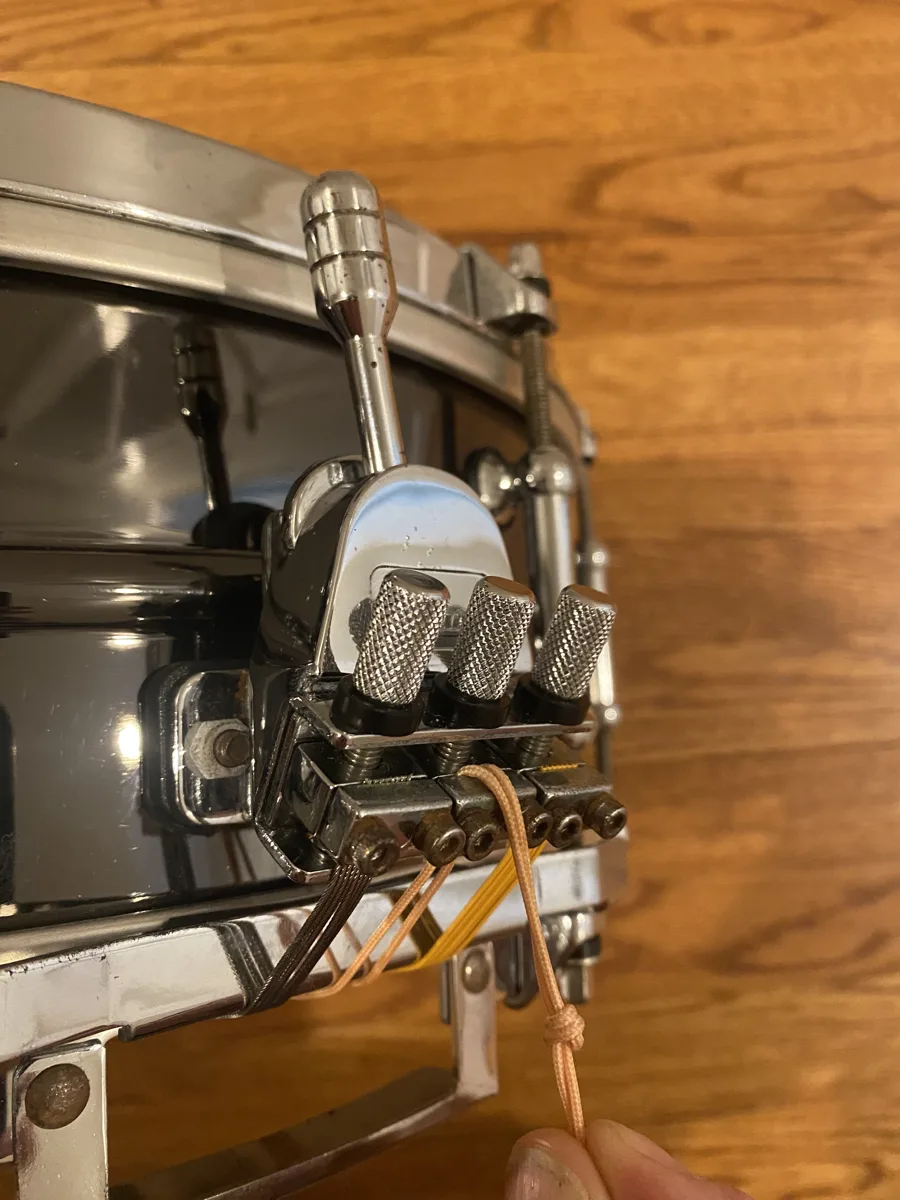
Go the other direction and you land on a piccolo snare: a 14"x4" or a 13"x3.5", the hummingbird of the snare family, built to speak instantly at a whisper. Black Swamp's own description of its piccolo model nails the brief: "lightning-quick response and delicate expression," for passages where a standard snare's extra shell depth would be too slow to answer the stick.
A piccolo lives at the high end of the snare family to begin with, so getting it into range does most of the work. Keep the resonant head tight and controlled rather than ringing freely: the whole point of this drum is articulation over sustain.
If the strainer mechanism itself is the problem, not the heads, that's usually a repair call rather than a tuning one. We see this often enough on concert strainers with individual per-wire screws (pictured above) that it's worth a look before you keep fighting the tension rods.
Tuning a Concert Field Drum
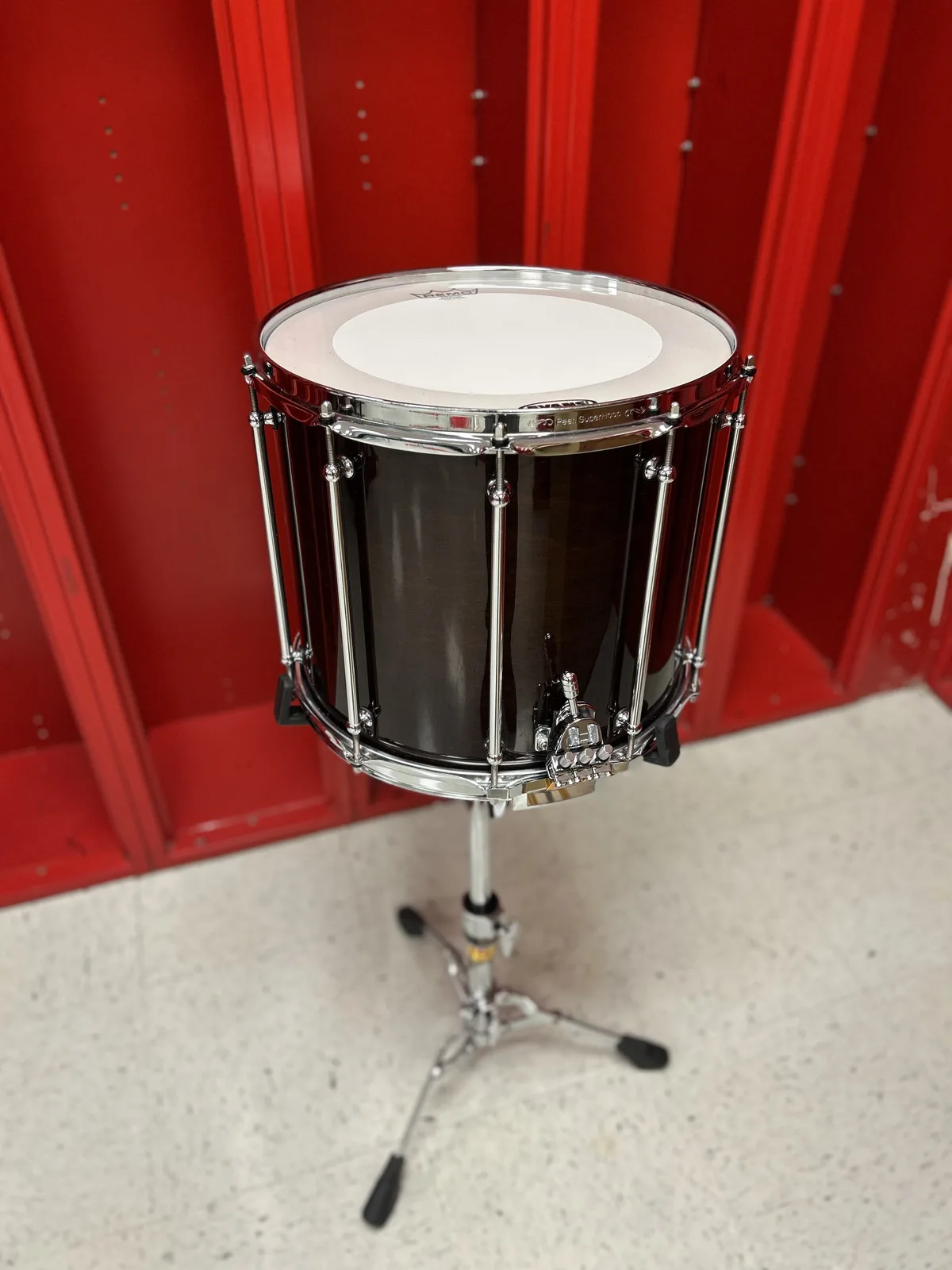
A concert field drum isn't a bigger concert snare, it's a different instrument wearing a similar shell. If the piccolo snare is the family's hummingbird, the field drum is the great-uncle who still answers the landline: deeper voice, strong opinions about how things used to be done, and no interest whatsoever in blending in at the family photo. Modern catalog sizes run 14"x12" up to a genuinely huge 16"x16", with Evans listing the 14"x12"'s batter range at E to G, noticeably lower than the workhorse snare's range. BYU's percussion program traces that depth to history: field drums traditionally ran closer to 15 inches across and 10 to 12 inches deep, tuned low on purpose to echo the drums real military bands carried.
That history is the whole point of the sound, and it's a genuinely different color, not just a lower-pitched snare. Vienna Symphonic Library's percussion academy describes it as deeper and darker than a standard snare's bright, snapping bite, and credits two real, specific moments for it: Haydn reaching for that military atmosphere in his "Military" Symphony, and Rossini giving it an actual solo in the overture to The Thieving Magpie.
If a part specifically calls for a field drum, swapping in a standard snare tuned low is a compromise, not a substitute. The shell depth is doing real acoustic work that a shallower drum can't fake.
Tune a field drum slow and patient. There's more air inside a shell this deep, so it takes longer to settle than a standard snare, and rushing it is the fastest way to end up with uneven tension across the lugs, a head that never quite locks into place no matter how many times you go back over it.
Tuning a Marching Snare Drum
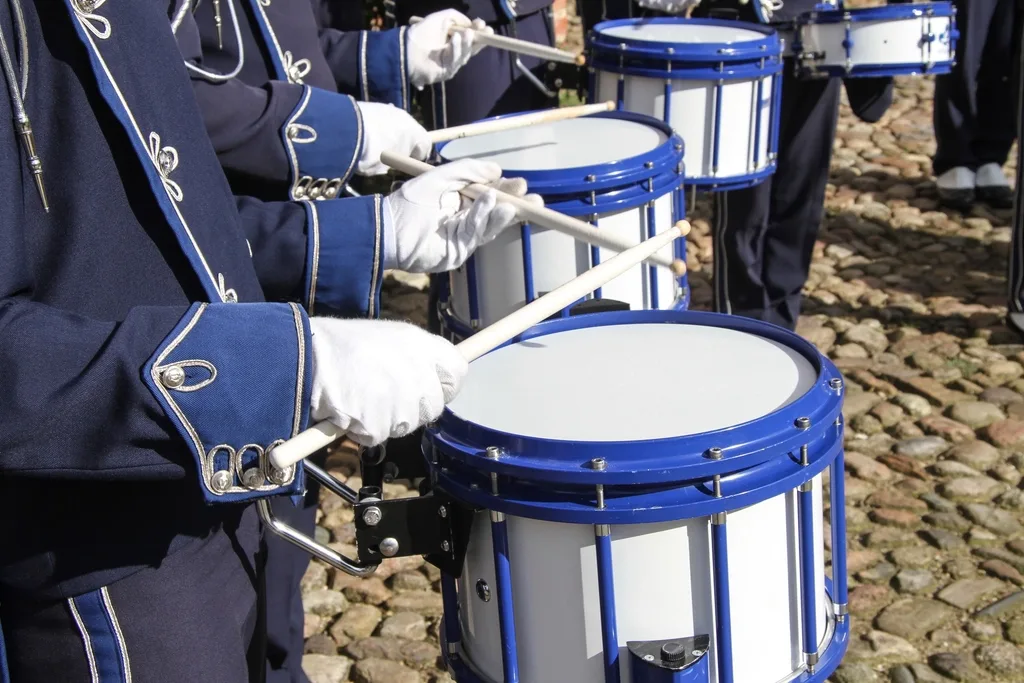
Marching snares run 13"x11" or 14"x12", the two sizes you'll find across Pearl, Yamaha, Ludwig, and Dynasty's current lineups, and every one of them is built to survive being hit harder and tuned tighter than anything indoors.
A lot of directors were taught, and still believe, that tighter is better on a marching snare: crank it to the ceiling and let the loudest drum win. That's how things used to be tuned, and the idea hasn't fully let go even as the guidance has changed. A snare tuned past its range doesn't carry further, it just sounds thin, and a drum two notches looser can outplay it on actual projection.
Evans' own marching percussion guide is blunt about it: snares tuned too high "do not have a lot of projection and don't blend well with other instruments." A Bandmasters Review piece from D'Addario's own education team makes the same point: an over-tightened snare chokes instead of carrying. The concept hasn't changed even though that particular piece is from 2012. Real Yamaha spec sheets back it up with numbers: their marching batter heads span roughly B4 up to E5 across different models, not one maxed-out setting for every drum.
The fix is to tune high enough to articulate at a distance, then stop. If the drum sounds thin or brittle rather than sharp, you've gone past the point where more tension helps. Disengage the snares before you tune the batter head, or you'll spend the whole process fighting buzz instead of hearing the actual pitch.
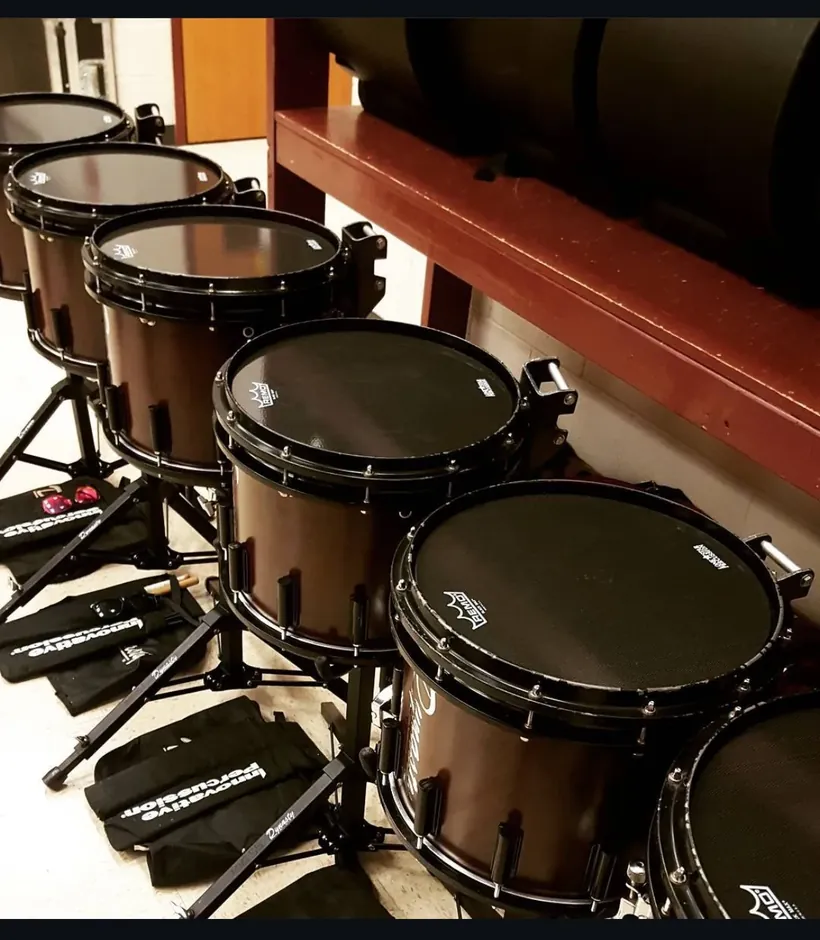
The snare strands underneath matter just as much as the batter head, and most marching lines never check them at all, not because anyone's doing it wrong on purpose, but because nobody's ever shown them the strands need their own tuning pass. Each individual strand needs to be tuned to the same pitch as the others, the same "plucked string" method Yamaha's own tuning guide walks through. A strand or two out doesn't ruin much, just a little extra wash in the sound. Get several loose at once and the response turns genuinely wet and sloppy instead of crisp, like a choir where one kid is a beat behind on a different song.
Getting a whole line ready before the next contest?
Head changes, strand replacement, and a full tuning pass for every drum on the sideline. Marching percussion repair is built around your competition calendar.
Tuning a Drum-Kit Snare
A drum-kit snare doesn't answer to a section or a sideline, it answers to a song, and that's what makes it the most personal drum on this whole list. Bring the batter head up until it pops back at your stick instead of thudding, then dial in the snare wires for crispness before you touch a single tom. The snare is the drum doing the most work on most songs, so most players tune it first and build the rest of the kit around it. For the rest of the kit, our full guide to tuning every drum covers toms and bass drum.
Jazz vs. Rock: Same Tension Rods, Different Goals
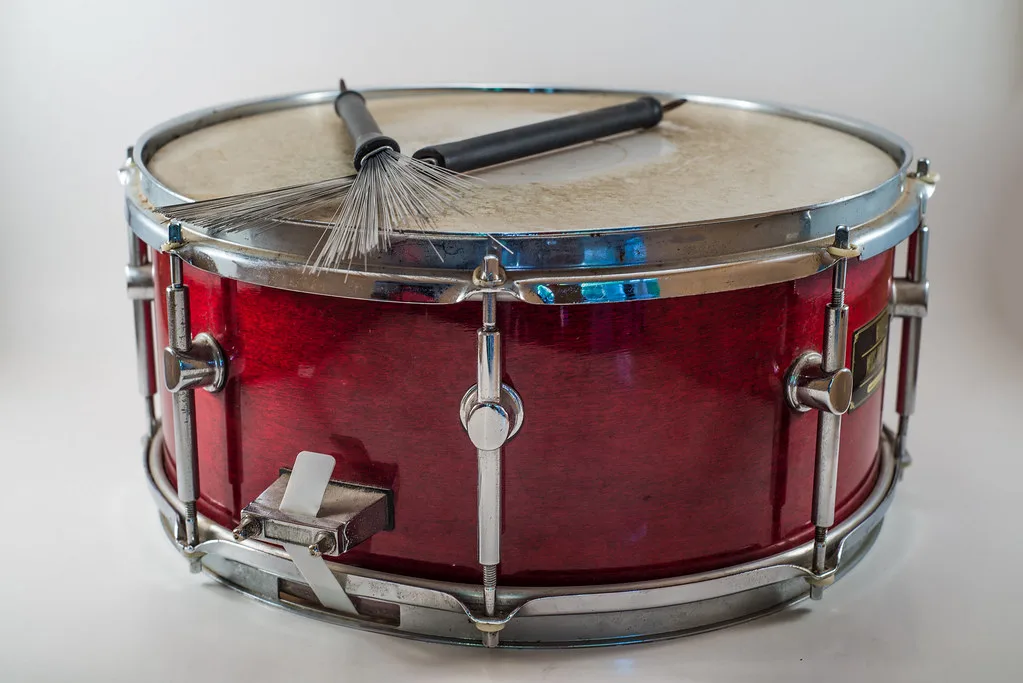
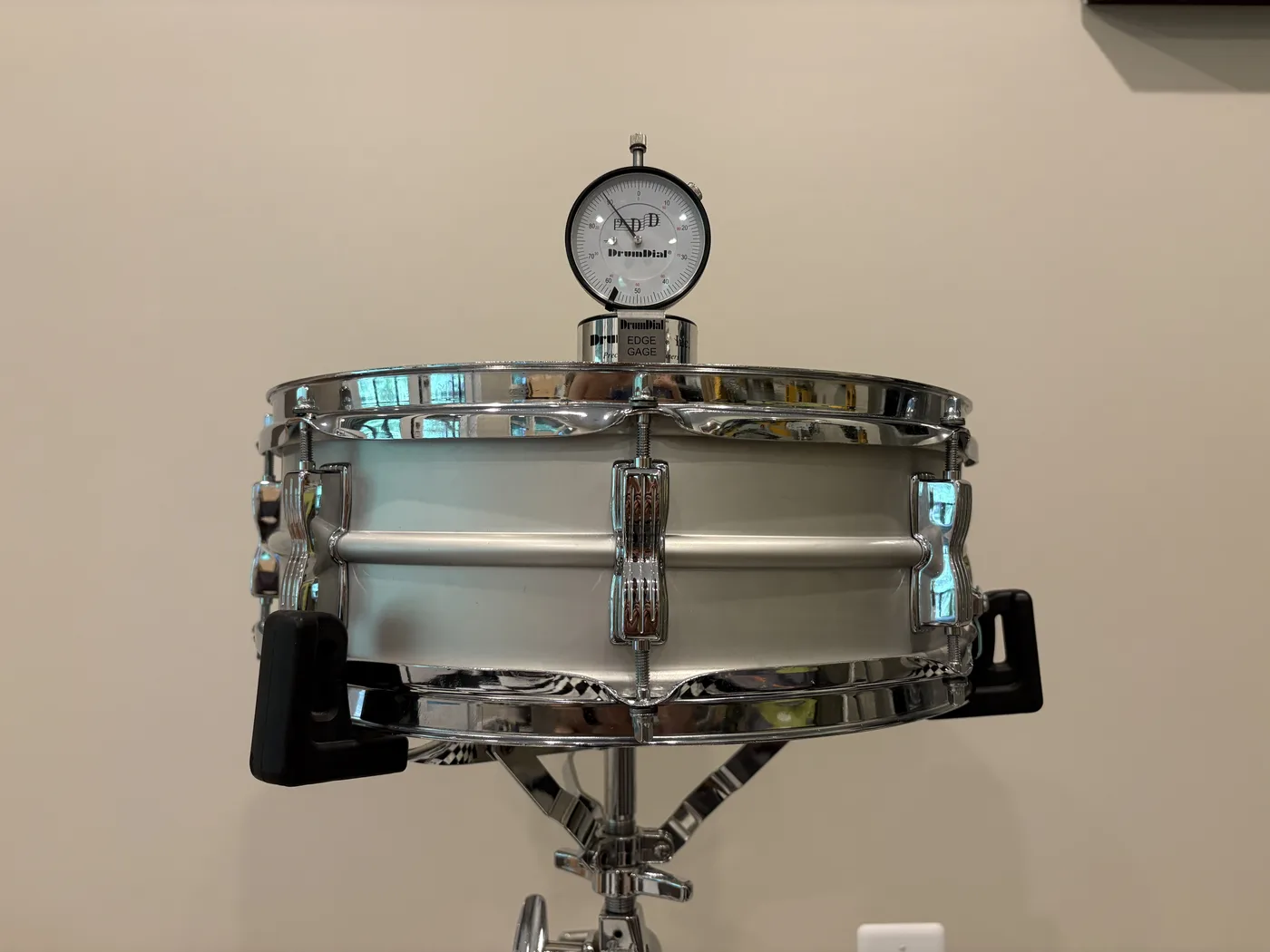
Genre decides the target before you ever pick up a drum key. Drumeo's own breakdown puts it plainly: rock and metal tunings run lower, while jazz and hip-hop players often tune higher, with real exceptions on both sides. On a drum dial, that's roughly the difference between tuning to 86 or 87 for a fat rock thump, and tuning to that same number while backing off the snare wires slightly for a crisp, brush-friendly jazz tone.
Size follows the same split. A jazz player reaching for brushes tends to land on a shallower drum, commonly a 14"x5", for a quick, open response. Rock and metal players more often go deeper, into 14"x6.5" or 14"x7" territory, for a thicker backbeat that doesn't get lost under a loud guitar rig turned up past the point of reason. I've played both kinds of gigs, and the drum that's perfect for brushes on a Tuesday jazz set is the wrong drum entirely for a Friday night rock show with no sound check and a bass player who believes in his amp more than he believes in most people.
Why Drummers Stockpile Snares
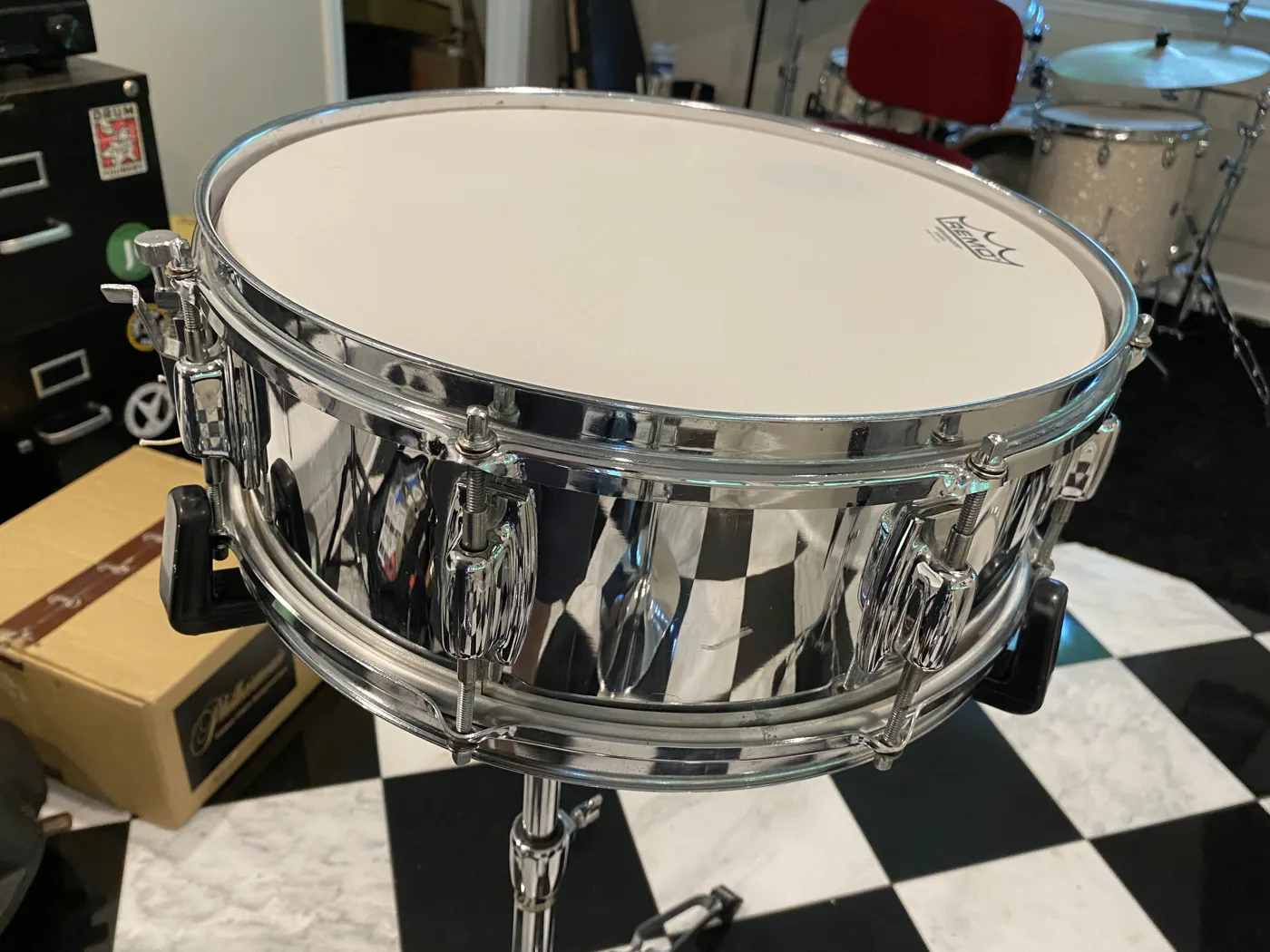
Ask a working drummer how many snares they own and watch them laugh, then hesitate before answering. It's a real, documented habit, not just gear hoarding dressed up as craft: Modern Drummer notes that studio players routinely swap to a different snare for every song specifically to change the overall voice of the kit.
One tune wants a dry, cracking Ludwig Acrolite. The next wants the fatter, more controlled snap of a Ludwig Black Beauty, a drum with enough range to show up on jazz, rock, and orchestral recordings under players from Ringo Starr to Buddy Rich. A handful of other names turn up constantly on working kits too: DW's Collector's Series, Tama's S.L.P. line, Yamaha's Recording Custom, and Mapex's Black Panther Persuader all have real reputations built on being the second (or fifth) snare in someone's locker, not the only one.
None of that is required to sound good. It's just what happens once you notice how much a snare changes a song, and you'd rather own the answer than guess at it mid-set. (It also makes moving apartments a two-truck job, but nobody warns you about that part.)
Wet vs. Dry: The Other Variable
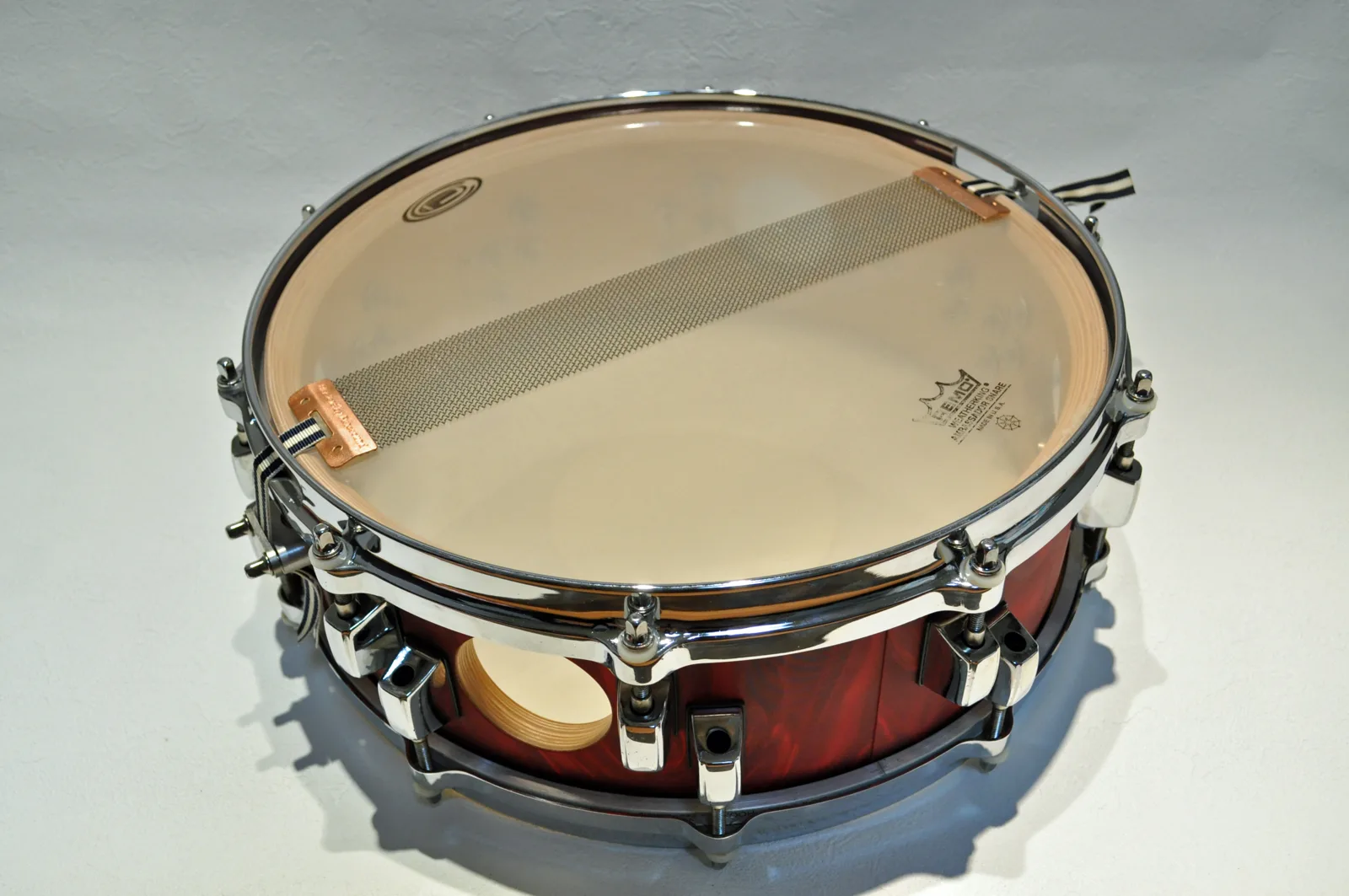
Pitch isn't the only dial. The same note can sound "wet," ringing and full of overtones, or "dry," short and controlled, and that comes down to snare wire tension and muffling, not the batter and resonant pitch you just dialed in. A wet snare is the guest who hasn't stopped talking since the hit landed. A dry snare said what it needed to say and sat back down.
Looser snare wires and less muffling let more of the drum's natural overtones through, the wet end of the dial. A dry snare is the opposite: wires tightened down and more muffling on the batter head, for a short, controlled hit with almost no ring left hanging after it.
Neither one is the "correct" sound, and the choice is just as much a genre call as pitch itself. Find the character the music is asking for, then tune and muffle toward it.
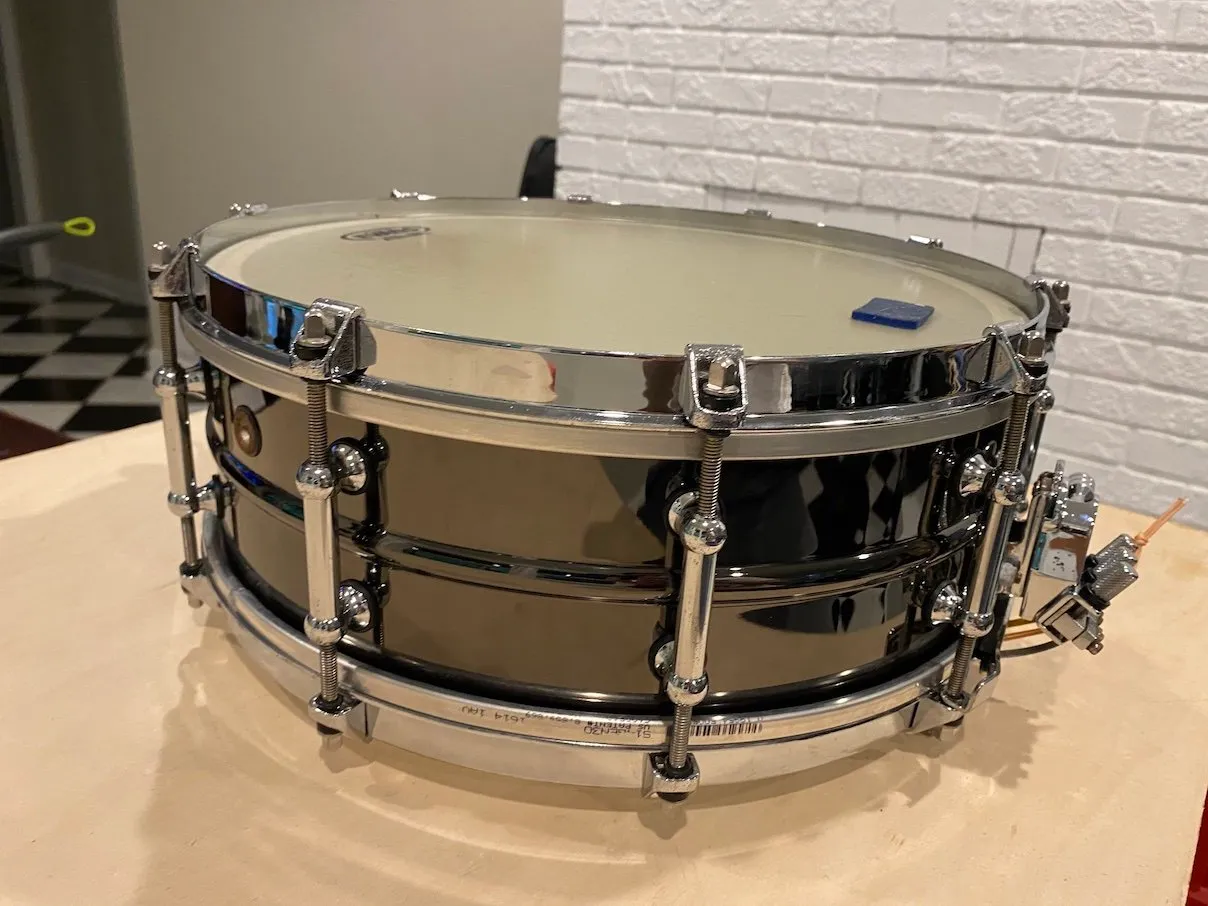
If you're choosing a new concert snare rather than tuning the one you have, size, head material, and muffling all factor in before tuning even starts, and our concert snare buying guide walks through that decision.
Still fighting a drum that won't hold its tuning?
Sometimes the problem isn't technique, it's a worn head, a slipping strainer, or hardware that needs attention before any amount of tuning will fix it. Snare drum repair is part of our standard service, across concert, marching, and kit setups.
Concert, field, marching, kit, or jazz, a snare drum comes down to the same tension rods and the same star pattern every time. What changes is the target, and now you know where every one of them actually sits. A chart or a digital tuner is a great way to get there fast. Just finish the job with your own ear, or a friend's, out in the room where the drum actually has to work.